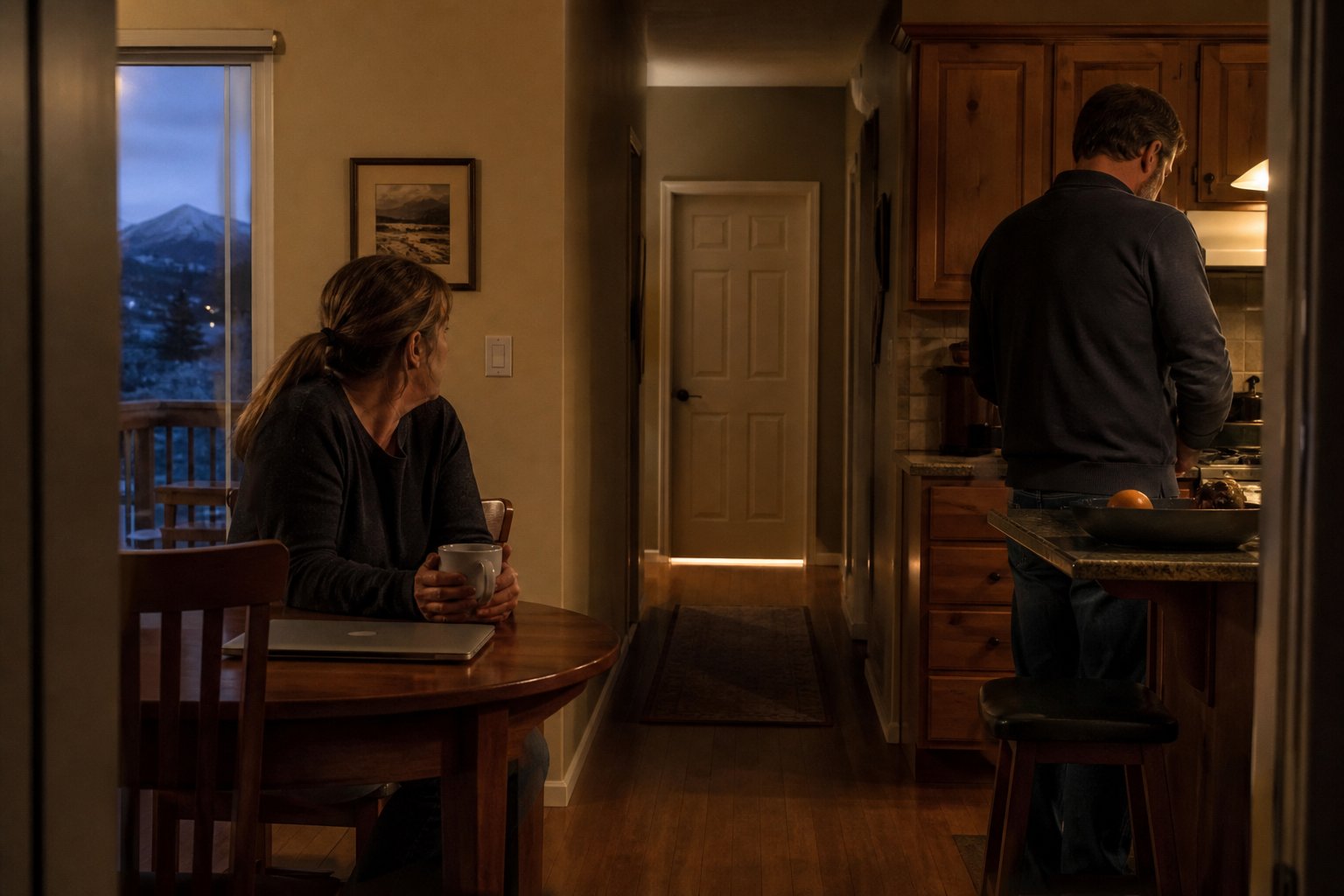

He used to have friends. You remember when he’d come home from school talking about his day — the argument at lunch, the plan for the weekend, the running joke in third period. You remember when the phone buzzed constantly.
Now it doesn’t.
Now it’s his room. The screen. The same orbit, day after day. And when you try to talk about it, he shrugs, or he disappears, or there’s a fight about nothing that’s really about everything. You’ve started to wonder whether this is just who he is — an introvert, a loner, someone who prefers solitude. You’ve also started to wonder whether something is actually wrong.
The truth is usually somewhere more complicated than either of those answers.
Social isolation in young adults is one of the most common and least-talked-about struggles I see in the families I work with. It often sits underneath other presenting issues — anxiety and depression, failure to launch, screen overuse, lost motivation. The isolation isn’t usually the root. But it becomes its own wound. And the longer it goes, the deeper it goes.
What Social Isolation Actually Looks Like
First, a distinction worth making: social isolation is not introversion.
An introverted young adult needs more alone time to recharge. They may have fewer, deeper friendships. They may not want to be at every party. This is not a problem — it’s a personality. Social isolation is something different. It’s withdrawal. It’s the narrowing of the world until the circle is very small, then smaller still.
Social isolation tends to look like one or more of the following:
- Declining invitations consistently — even from people they used to genuinely enjoy
- Loss of existing friendships without new ones forming
- Spending 8–12+ hours a day on screens, gaming, or passive content consumption
- Difficulty making eye contact or engaging in extended conversation
- Expressing that socializing feels exhausting, pointless, or anxiety-provoking
- Functioning relatively okay in structured environments (school, work) but having no social life outside them
- Claiming not to want friends — while clearly being lonely
That last one matters. A young adult who says they don’t want connection is usually telling you something about how unsafe connection has felt. Not about what they actually need.
Why Young Adults Pull Away
Isolation rarely has a single cause. More often it’s a constellation of factors that reinforce each other over time. Here are the five I see most frequently:
1 Social Anxiety
Social anxiety is the fear of being judged, embarrassed, or rejected in social settings — and it is far more prevalent in young adults than most people realize. It can look like shyness. It can look like arrogance. It can look like not caring. What it actually is: a nervous system that experiences social interaction as a threat and avoidance as relief. Over time, avoidance teaches the nervous system that social situations are dangerous — and the world gets smaller.
2 Shame
A young adult who has struggled — with grades, with work, with mental health, with substances, with anything that puts them behind the perceived social norm — often develops a story about themselves: I’m not doing what I’m supposed to be doing, and if people see me, they’ll see that. Shame drives hiding. Hiding drives isolation. And isolation, paradoxically, feeds the shame — because being alone feels like proof of the story. This is one of the most painful cycles I see, because the person is suffering on both ends of the loop.
3 Unprocessed Hurt or Betrayal
Sometimes isolation follows a specific wound — a friendship that ended badly, a betrayal, bullying, a romantic relationship that involved manipulation or genuine harm. When connection has been a source of real pain, withdrawal isn’t irrational. It’s protective. The problem is that protection becomes a prison. The wall that kept the pain out also keeps the healing out. Without a relationship that feels genuinely safe enough to test a different experience, the lesson learned from hurt becomes a permanent policy: people aren’t safe.
4 Screens Replacing Connection
Screens don’t cause isolation — but they make it easier to sustain. Gaming communities, social media, streaming — these provide stimulation, entertainment, and even a thin form of social contact that feels like enough when you’re not measuring it against anything better. The real social world requires risk: the possibility of rejection, the demand of presence, the unpredictability of actual people. Screens don’t require any of that. And the more time spent in that low-risk environment, the more the real social world starts to feel overwhelming by comparison.
5 Identity Confusion
Young adulthood is supposed to be a time of identity formation — figuring out who you are, what you believe, what kind of person you’re becoming. Without clear answers to those questions, social settings can feel particularly threatening. If you don’t know who you are, you don’t know how to show up. Every gathering feels like a performance you haven’t rehearsed. Pulling away is a way of avoiding the exposure — but it also prevents the very experiences (failure, connection, feedback, belonging) that would help the identity form.
For Parents — What Helps and What Hurts
The instinct to fix this is natural and understandable. But some of the most common responses don’t help, and a few make things worse.
- Pressure and social engineering — forcing them to events, arranging social situations without their buy-in, commenting every time they’re alone again
- Comparison to peers — “your brother was out every weekend at your age” lands as shame, not motivation
- Minimizing — “you just need to put yourself out there” treats a real struggle as a simple preference
- Withdrawing in frustration — silence and distance, however understandable, deepen the isolation
What does tend to help:
- Staying in low-stakes contact. Not every conversation needs to be about the problem. Just showing up — a short walk, watching something together, sharing a meal — maintains the relationship without pressure.
- Asking without agenda. “How are you actually doing?” — asked without expecting a particular answer — creates more opening than “Why don’t you call anyone anymore?”
- Naming what you’re seeing with compassion, not alarm. “I’ve noticed you seem pretty isolated lately and I worry about you” lands differently than “You never leave your room.”
- Finding professional support — for both of you. This level of withdrawal usually needs more than a family conversation can provide.
For the Young Adult — You’re Not Broken
If you’re the one who’s been pulling away — who has found it easier to stay home than to go out, to keep the circle small or absent, to let friendships quietly expire — this is for you.
You don’t need to be fixed. But you may be more stuck than you realize.
Isolation has a way of becoming its own logic. The longer you stay away from people, the more people feel foreign. The more foreign they feel, the more reasonable it seems to stay away. That loop can run for years. And at the end of it, loneliness isn’t just a feeling — it’s a way of life you’ve organized yourself around without meaning to.
Here’s what’s worth knowing: the solution is not to force yourself into crowds. It’s not to become someone who loves parties if you never did. It’s to find one relationship — just one — that feels safe enough to be honest in. That’s where the thaw begins.
The problem is finding that relationship when you’ve been avoiding all of them. That’s where a mentor can help.
How Mentoring Breaks the Isolation Cycle
For young people whose isolation runs through a screen — gaming through the night, a social life that exists only in a headset — our gaming and screen addiction support starts there and builds outward into the real world.
Therapeutic mentoring works here in a way that other supports often don’t — because a mentor offers something specific: a structured, consistent, non-judgmental relationship that doesn’t require the vulnerability of peer friendship.
Peer friendships have stakes. There’s history, comparison, social hierarchy, the possibility of rejection from someone in your world. A mentoring relationship is different. Your mentor is not in your social circle. They’re not evaluating you against anyone else. They show up without agenda, week after week, in your actual life — not in an office. That low-stakes, consistent presence creates the exact conditions in which the nervous system can begin to relax.
Over time, the mentoring relationship becomes evidence that connection is possible. Not theoretical evidence. Lived evidence. And that experience — of being known by someone without being judged — starts to generalize. The young person begins to risk a little more with others. The circle quietly widens.
This is not a quick fix. It takes time. But I’ve watched young adults who had retreated so far that their families had nearly given up — begin to come back to life through this kind of relationship. Not because we fixed the isolation. But because we gave them a reason to practice connection again.
About the Author
James Farmer
James Farmer is the founder of Noble Mentors. He has over a decade of experience mentoring teens and young adults through wilderness therapy, residential treatment, and private practice along Colorado’s Front Range. His approach is rooted in lived experience, depth psychology, and a deep belief in the transformative power of authentic human connection.
Noble Mentors
Real help for this exact struggle
If this article hits close to home, our Social Anxiety & Isolation Support page shows exactly how we walk alongside families like yours. Or start with an overview of therapeutic mentoring for teens and young adults.