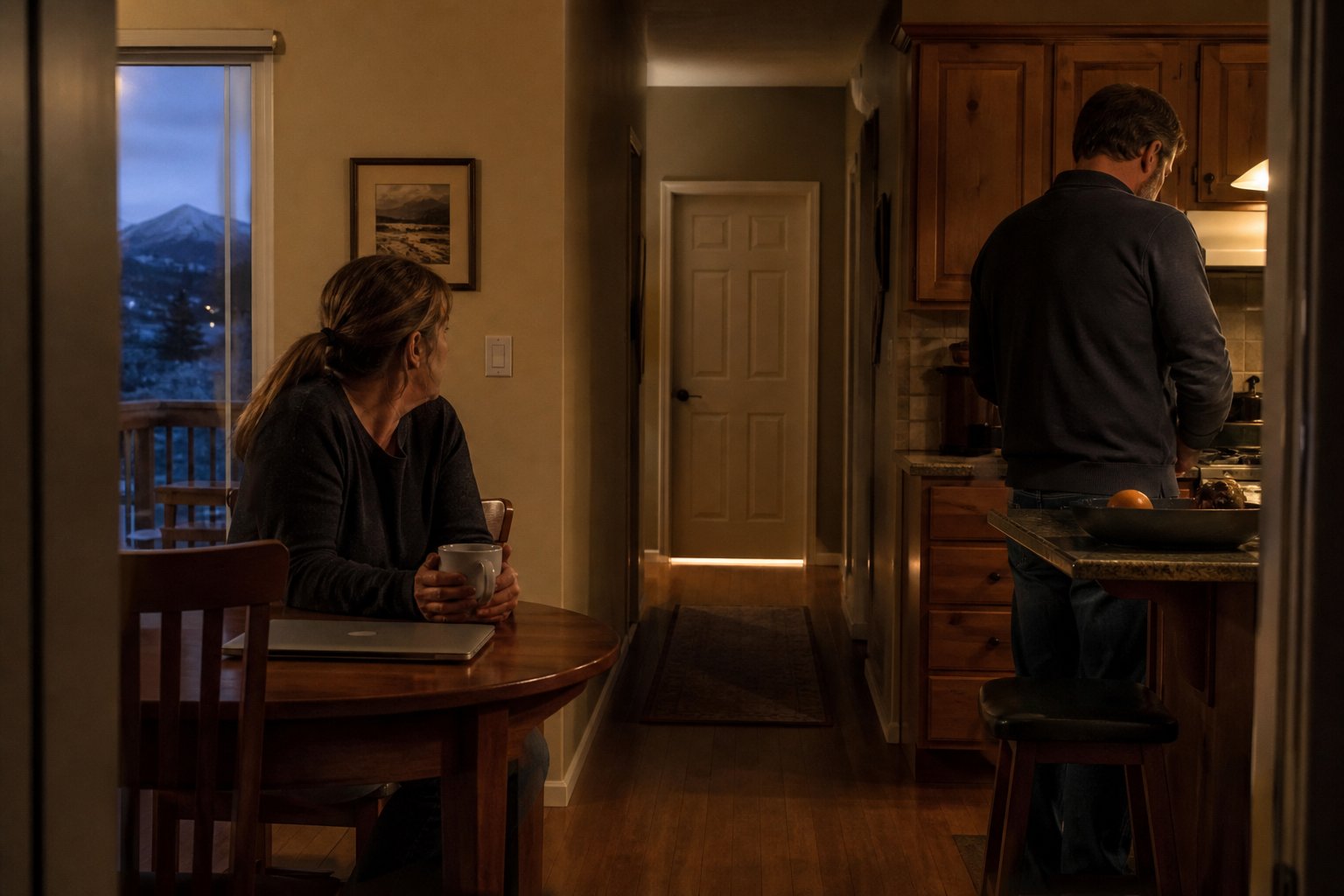
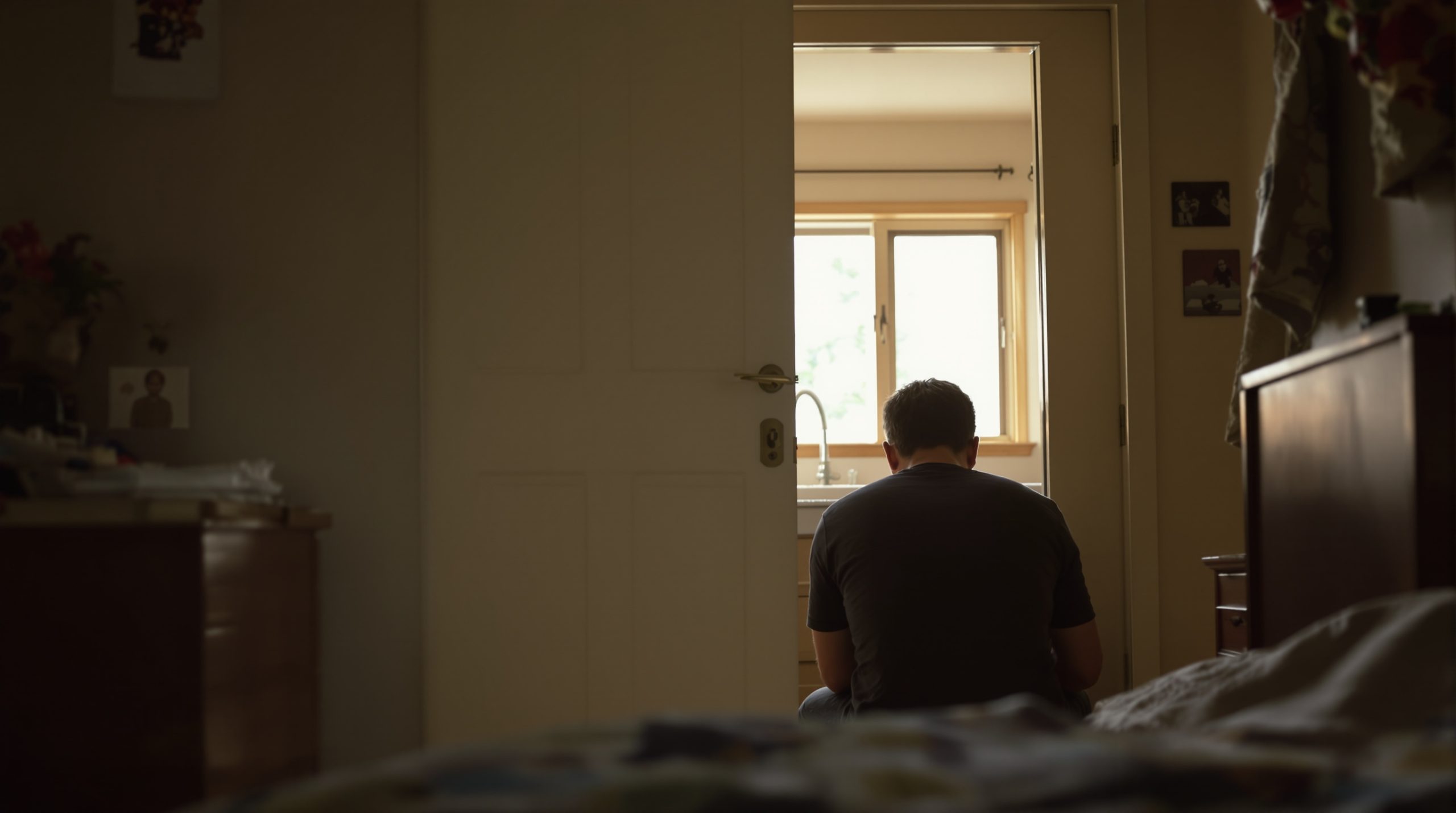
There’s a particular kind of helplessness that sets in around that closed door.
You know he’s in there. You’ve heard the faint hum of his computer, the occasional creak of his chair. You’ve knocked and gotten the minimum — “I’m fine,” “not hungry,” “leave me alone” — but fine doesn’t look like this. Fine isn’t three days without sunlight or real conversation. Fine isn’t meals you’ve started leaving outside his door because a conversation about dinner turned into a fight last time.
You’re not overreacting. You can feel it in your body — the weight of the thing that’s not being said.
I want to speak directly to that. Because you need more than a list of strategies right now. You need to understand what’s actually happening on the other side of that door.
What the Room Has Become
The room isn’t laziness. It isn’t defiance, in the usual sense. For most of the young men I work with who have retreated this way, the room has become something specific: the one place where nothing is expected of them.
Out there — at school, with peers, at family dinner — there are requirements. There is performance. There is comparison. There is the daily reminder of everything they feel behind at, everything they can’t quite pull off, everything that seems to come easily to others and doesn’t come at all for them.
In the room, all of that stops.
What looks like withdrawal is usually a search for relief. And that relief, however imperfect, is real. The room works — in the short term, in the way that any avoidance works. It makes the pain quieter.
But avoidance grows. What started as a few evenings alone becomes a week, then a month. The longer the retreat, the higher the wall, and the harder re-entry becomes. The gap between your son’s internal world and the world outside his door widens every day. And he knows it.
That knowledge is part of what keeps him in the room.
What’s Actually Underneath It
1 Social shame and identity loss
Adolescence is, at its core, a crisis of identity. Your son is trying to figure out who he is — but that work requires social mirrors, peer feedback, experimentation, and failure in a contained way. When something breaks that process — a social wound, a humiliation, a string of failures that started to define him in his own mind — the room becomes the place where he doesn’t have to keep performing an identity he’s not sure he has.
2 Anxiety expressed spatially
Anxiety doesn’t always look like panic. In teenagers — especially young men — it often looks like geography. They shrink the world to a manageable size. The room is the size of their nervous system’s tolerance. Everything outside it contains too many variables they can’t control, too many ways to fail or be seen failing. This isn’t cowardice. It’s a nervous system trying to protect a person who hasn’t yet learned to regulate overwhelm.
3 Depression wearing the costume of withdrawal
Teenage depression rarely announces itself with tears. It often arrives quietly — as flatness, as a loss of interest in things that used to matter, as a progressive pulling away from the world. The room is both symptom and amplifier. Isolation deepens depression; depression deepens the desire for isolation. If your son’s withdrawal has been ongoing for more than a few weeks, depression belongs in the picture you’re trying to understand.
4 Overstimulation and social exhaustion
Modern adolescence is relentlessly stimulating. The social demands of school, the persistent hum of digital connection, the pressure of performance across multiple platforms — for some young people, this creates a state of chronic overstimulation. The room becomes sensory and social rest. This is especially true for teenagers with sensory sensitivities, introverted temperaments, or underdeveloped emotional regulation — the room isn’t a rejection of connection so much as a desperate search for quiet.
What Makes It Worse
I want to say this carefully, because every parent reading this loves their kid deeply and is doing what love tells them to do. The instincts aren’t wrong. But they often misfire here.
Ultimatums and hard deadlines (“if you’re not out of your room by noon I’m taking the door off”) create short-term compliance and long-term damage. They confirm for him that the outside world is coercive and unsafe — which is already what he believes.
Constant check-ins and knocking can feel like surveillance. Even when the intention is warmth, it can read as pressure. The nervous system that’s already overwhelmed doesn’t distinguish well between love and demand.
Withdrawing his only source of regulation (typically screens) without replacing it with something better creates a vacuum filled with greater anxiety and resentment — not movement.
Treating this as a character problem (“you’re being lazy,” “you need to grow up”) adds shame to an already shame-saturated situation. Shame doesn’t motivate. It immobilizes.
In my experience, the interventions that feel most satisfying to parents — the ultimatums, the confrontations, the “enough is enough” moments — are the ones that most reliably make things worse. Not because your son doesn’t need a push. He does. But the container has to be built before the push can land safely.
What Actually Creates Movement
This is slower work than you want it to be. I need to be honest about that. There is no conversation or consequence that unlocks this in a weekend. What moves a young person out of this kind of retreat is the gradual accumulation of something — safety, relationship, small wins, proof that the world outside the room is survivable.
Patient, low-demand presence is the foundation. Not knocking with an agenda. Not framing every interaction around what needs to change. Simply being a warm presence that doesn’t require him to perform. A meal offered, not insisted on. An invitation without expectation attached. This is harder than it sounds when you’re frightened.
Low-stakes entry points back into the world. Not “time to get a job” — but a walk. A drive together with no required conversation. A movie, a sporting event, something that puts him in the world without demanding he perform in it. You’re rebuilding his tolerance for outside-the-room reality in small, safe doses.
Mentored real-world engagement often makes the difference when family efforts have plateaued. The dynamic between parent and son carries too much history, too much charge. A mentor — someone who holds him with warmth and doesn’t have the parental weight attached — can reach him in ways the family can’t. This isn’t a failure on your part. It’s just the nature of relationship and proximity.
Connection to something that matters to him. The path out of the room is almost never through logic or obligation. It’s through desire. What does he actually care about? What, even faintly, interests him? That thread — however thin — is the one to follow.
What This Can Look Like Over Time
I’ve walked alongside a lot of young men who lived for a significant period in a version of this room. What I’ve seen — when the right support arrives — is that the movement out isn’t dramatic. It’s quiet. A conversation that goes a few minutes longer than usual. A day where he came to dinner without being asked. A text sent to someone he’d been avoiding. Small moments, building.
The room is rarely permanent. But it can become more permanent without the right response. The window doesn’t stay open forever — not because your son stops wanting connection, but because the longer the isolation continues, the more daunting re-entry becomes.
This is the moment to move toward him, not with pressure, but with patience and some help.
A Few Questions Worth Sitting With
- When you knock on his door, what are you hoping for — and what are you afraid of? Is your knock carrying more than you intend?
- Think back to when this started. What was happening in his life at that time? Is there an original wound you’ve been working around?
- What does he light up about, even slightly? Where is the thread of real interest, and when was the last time someone followed it with him without agenda?
If you’re watching your son disappear behind that door and you’re not sure what to do next, that instinct to reach for help is worth following. Therapeutic mentoring offers something a parent often can’t: a relationship outside the family, grounded in the real world, that meets a young man where he is without requiring him to be somewhere else first. If you’d like to talk about whether this could be the right fit, we’re here for that conversation. You can reach us through our contact page.
About the Author
James Farmer
James Farmer is the founder of Noble Mentors. He has over a decade of experience mentoring teens and young adults through wilderness therapy, residential treatment, and private practice along Colorado’s Front Range. His approach is rooted in lived experience, depth psychology, and a deep belief in the transformative power of authentic human connection.
Noble Mentors
Real help for this exact struggle
If this article hits close to home, our Failure-to-Launch Support page shows exactly how we walk alongside families like yours. Or start with an overview of therapeutic mentoring for teens and young adults.