

FOR PARENTS OF KIDS, TEENS, AND YOUNG ADULTS LOST IN GAMING AND SCREENS
Noble Mentors pairs your child with a mentor who builds a real life alongside him — one interesting enough to compete with the screen.
of mentoring
families served
or less, from your call to a first session
We mentor young people from age 11 into their late twenties. Most of the gamers we work with are teenage boys and young men — and we mentor young women too.
Serving Boulder, Denver, and the Colorado Front Range. Home office: Lafayette, Colorado.
A free 40-minute consultation call. No pressure, no obligation. If we are not the right fit, we will point you to who is.
Back to real life · 15%
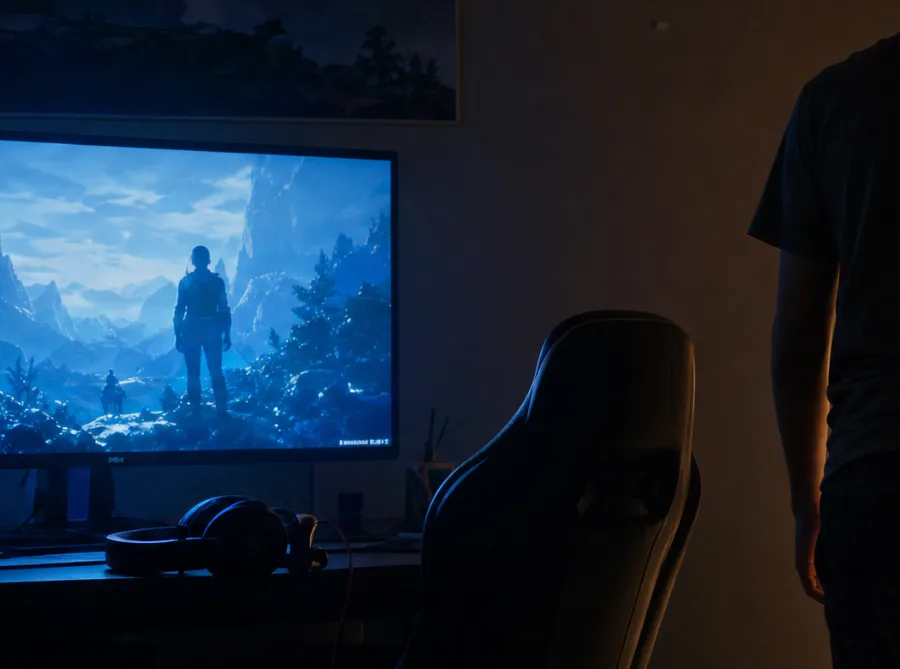
What it looks like when the screen is winning
Most parents tell us they watched this build for a year before they called anyone.
- Up past 2 a.m. again, and the door is closed.
- Grades slipping, showers skipped, meals carried up to the desk.
- When the Wi-Fi goes off, the anger that comes out scares you.
- Friends stopped coming around — the only voices in his life come through a headset.
- Every conversation about it ends in a fight or a shrug.
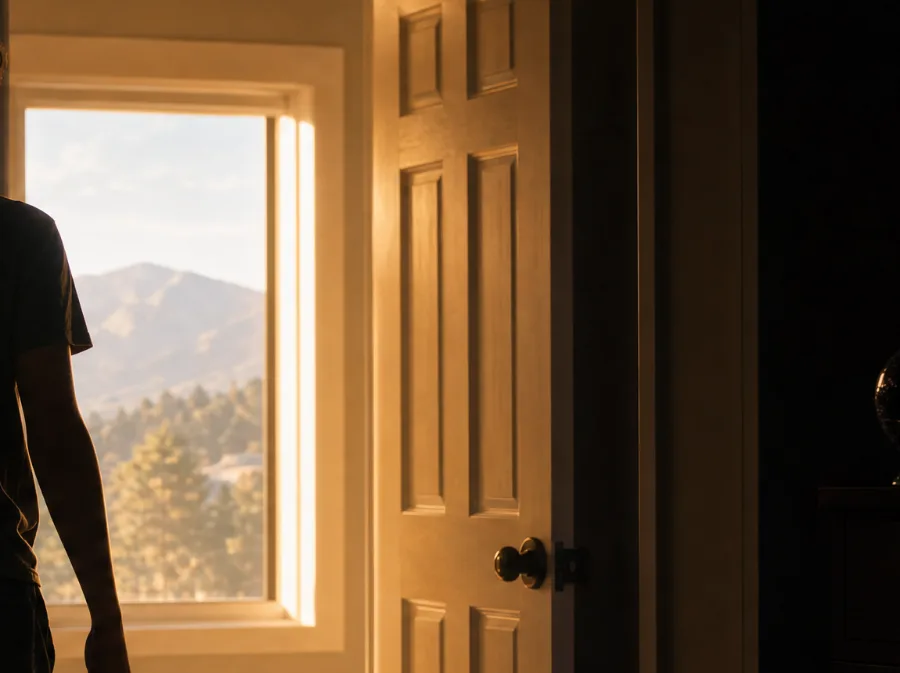
- He used to love the mountains, the pool, the guitar. Now it is one glowing rectangle.
He probably does not think there is a problem. That is normal — at Stanford’s youth recovery clinic, almost every screen-addiction referral comes from a parent, not the young person. If you recognize your house in this list, trust what you are seeing.
Back to real life · 35%
How Noble Mentors helps with gaming and screen addiction
Several of our mentors know the pull from the inside. They have been through their own seasons of gaming and screens, and they have built lives they do not want to escape from. That is who sits down next to your son.
Back to real life · 50%
How it starts
You call
A free 40-minute conversation about what is actually happening at your house. He does not have to be ready. He does not even have to know yet.
We match
We pair him with a mentor he will actually respect — often one who has lived the gaming pull himself and come out the other side.
Mentoring begins
First session within a week of matching — in the real world, doing real things, not in an office.
We take a limited number of families at a time so mentors can go deep with each one. If we are full or not the right fit, we will tell you straight and point you somewhere good.
Back to real life · 65%
What this looks like in real life
Composite stories — details are changed and combined to protect privacy.
The 15-year-old whose world had shrunk to a bedroom
Nine hours a day online, meals left outside the door, and nearly every family conversation ending in an argument about the router. The mentor did not begin with restrictions. They began with a reason to come out: climbing twice a week, a consistent wake time, and one shared dinner the teen agreed to attend. As trust grew, they worked on homework and gaming limits together. Three months later, gaming was still part of life, but no longer all of it. Schoolwork was getting turned in, and family conflict had eased.
The 23-year-old whose world existed online
Two semesters from graduating, they had stopped attending class, reversed their sleep schedule, and organized each day around Modern Warfare raids with friends in other time zones. The mentor met them where they were, and built outward: waking earlier, going to the gym, completing a résumé, and taking a part-time job with real responsibilities and coworkers. Once the week had structure, they re-enrolled for spring. They still game, mostly on weekends, but now it fits around work, school, and relationships instead of replacing them.
“The screen is not the enemy. It becomes the place a young person hides when real life stops feeling winnable. We do not shame anyone out of hiding. We walk in, sit down next to them, and start building a life out here that is worth coming back for.”
James Farmer — Founder, Noble Mentors
You are not alone in this
of U.S. teens spend four or more hours a day on screens outside of schoolwork
CDC / NCHS, National Health Interview Survey–Teen, 2021–2023
referrals to Stanford’s youth recovery clinic are now for screens, not substances
Stanford Medicine, 2025
of young adults worldwide meet criteria for internet gaming disorder
Meta-analysis of 93 studies, Addictive Behaviors, 2025
The pull is engineered, and it is strong. Your family is not failing — and you are not facing it alone anymore.
Back to real life · 75%
THE RESEARCH
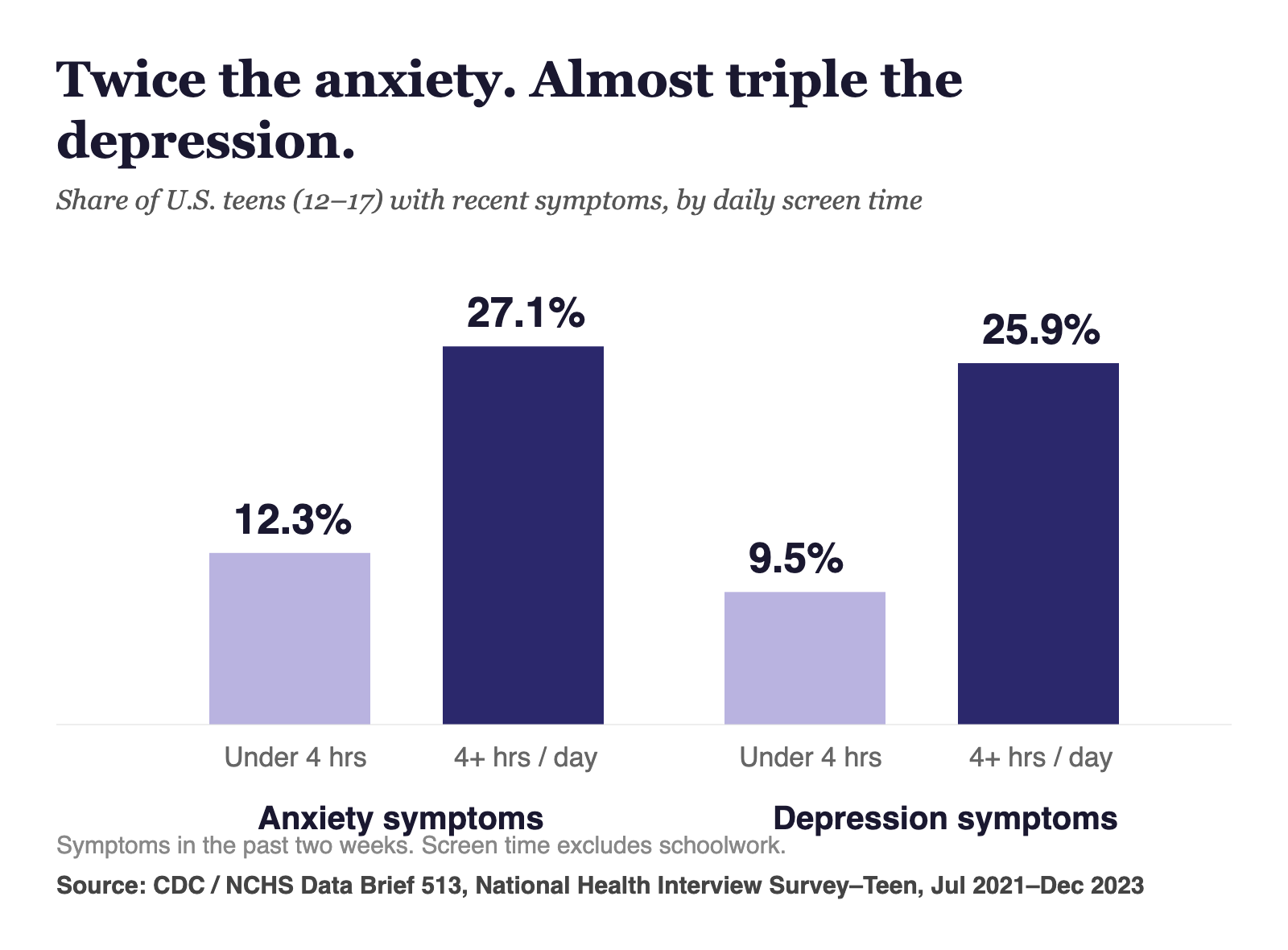
Heavy screen time and heavy moods travel together
The CDC’s national teen survey found that half of American teenagers now spend four or more hours a day on screens. Among those heavy users, about one in four reported recent anxiety or depression symptoms — roughly double the rate of teens with lighter screen time.
The hopeful part: it moves in both directions. Stanford’s youth recovery clinic reports that when gaming comes down, mood, anxiety, sleep, and day-to-day functioning improve — often within weeks. The screen does not have to stay in charge for this to turn.
Back to real life · 85%
Why willpower alone loses this fight
If your son has promised to cut back a dozen times and could not, that is not weak character. Look at what he is up against.
Games are built by professionals
Teams of engineers and behavioral designers optimize every reward, streak, and battle pass for one outcome: keep playing. A 15-year-old armed with a promise is outmatched.
The real world pays out slower
A game shows progress every few minutes. A semester, a friendship, or a stronger body takes months. Until real life has wins of its own, the brain keeps choosing the faster loop.
His friends live there
Logging off can mean losing his whole social world in one move. Quitting alone feels like exile — which is why nobody should have to do it alone.
Screens are not optional
School, homework, and work all run through the same machine the games run on. There is no clean abstinence here. Balance has to be built, skill by skill.
Sleep debt does the rest
Two a.m. nights make school miserable, and misery makes the game more appealing the next day. The cycle feeds itself until someone interrupts it.
Shame keeps the door closed
Lectures and confiscations teach him to hide better. Connection has to come before change — that is not soft, it is how change actually starts.
One thing we take seriously: if the gaming has come with talk of hopelessness or self-harm, call or text 988 first — and stay close. Mentoring works alongside therapists and doctors, never in place of them.
Back to real life · 95%
What you can expect to change
- Sleep comes back first. Bedtime stops being a standoff, and mornings stop being a war.
- Daylight fills with real things. The gym, driving practice, job applications, a trailhead on a Saturday.
- Meals return to the table. Grades stop free-falling and start recovering.
- Friends with faces. Not instead of online friends — in addition to them, in person, in his week.
- You retire from the screen police. The plan belongs to him and his mentor, so you get to be the parent again.
- Technology drifts back to what it was supposed to be. A tool in his life — not the place his life happens.

Back to real life · 100%
Questions parents ask
What if he refuses help?
Start without him. Almost every screen-addiction referral at Stanford’s youth clinic comes from a parent, not the young person — resistance is part of this, not a reason to wait. The first call is for you: what is happening, what has been tried, what a first step could look like. Our mentors specialize in young people who did not ask for a mentor.
Do you take the games away?
No surprise raids, no trash bags full of consoles. Our stance is balance: technology is part of our lives, and the goal is to turn it back into a tool instead of a distraction and a detriment. Sometimes a family decides a real break is needed first — if so, it is planned together and he knows the terms. The plan is built with him, which is why it holds.
Is gaming addiction actually a real thing?
The World Health Organization recognizes gaming disorder, and a 2025 meta-analysis found about six percent of young adults meet the criteria. But you do not need a diagnosis to act. If the screen is shrinking his life — sleep, school, friendships, family — that is reason enough.
How is mentoring different from therapy?
Therapy mostly happens in an office, one hour a week, working inward. Mentoring happens in his actual life — the car, the gym, the job hunt — working outward. Many of our families run both at once, and we are glad to work alongside a therapist. We do not diagnose and we do not replace clinical care.
What happens on the free consultation call?
Forty minutes with us, no cost and no obligation. You tell us what is happening at your house. We tell you honestly whether we are the right fit — and if we are not, we will point you to who is. If we are, your son is usually with his mentor within the week.














He can come back from this. It starts with one call.
A free 40-minute consultation call. No pressure, no obligation. If we are not the right fit, we will point you to who is.