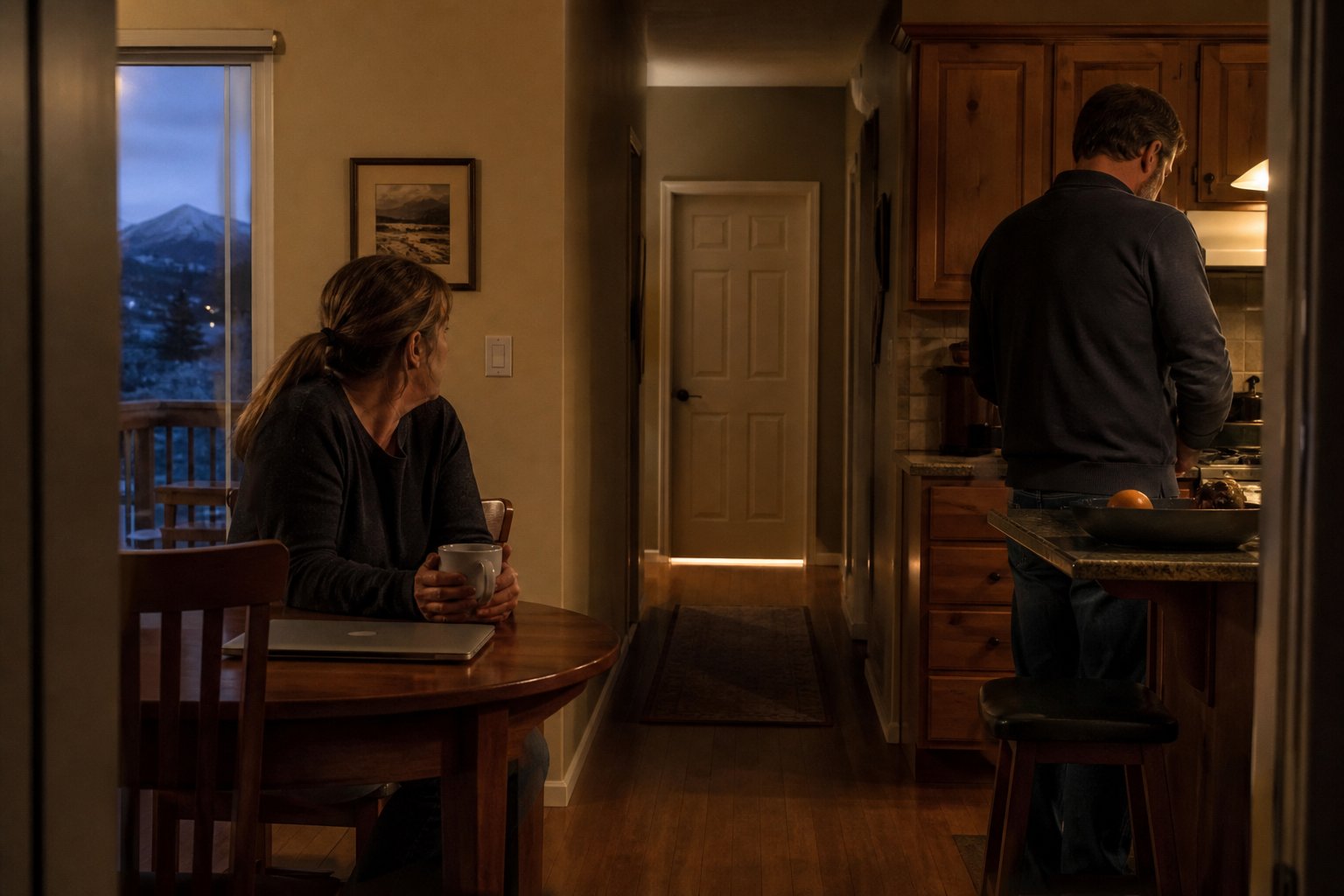

Something in you has been asking this question for a while. Maybe months. Maybe longer.
You’ve been watching — carefully, quietly, with the kind of attention that parents develop and can’t turn off. Something in your gut has been signaling that this isn’t a rough patch, that this is something else. But another part of you keeps second-guessing. Is this normal? Am I overreacting? Kids go through hard stretches. He’s been through hard stretches before.
The fact that you’re asking the question at all is important. I’ll come back to that.
The Difference Between Hard and Stuck
Every young adult goes through hard periods. The early twenties are, by design, turbulent. Identity is still forming. Life direction is unclear. Relationships shift. The gap between who you think you should be and who you actually are gets exposed by the demands of adulthood in a way it wasn’t before. Some struggle in this period is healthy — it’s the friction of growth, not the stillness of a life that isn’t moving.
The distinction that matters is between hard and stuck.
Hard looks like: uncertainty with forward movement. Struggling with a job but showing up to it. Anxious about the future but making some attempt to engage it. Relationship difficulties alongside ongoing connection. Pain present, but life still has velocity.
Stuck looks different. Stuck is when the same week keeps repeating. When the forward motion has genuinely ceased. When the strategies that used to work have stopped working, and new ones aren’t being tried. When the young person’s world is getting smaller, not larger, over time.
Signs That Warrant Real Attention
There’s no checklist that replaces your parental attunement. But there are patterns I’ve seen across years of work with young adults in crisis that consistently signal something more than ordinary developmental difficulty.
1 Extended withdrawal from people and world
Not introversion. Not needing space. But a progressive narrowing — fewer relationships, less contact with the outside world, days going by without meaningful engagement. The measure here is direction: is the world getting smaller over time?
2 Loss of future orientation
One of the most reliable indicators of serious struggle is when a young person stops being able to imagine their future. Not confusion about direction — that’s normal. I mean the complete absence of anticipation, planning, or any sense of forward trajectory. When there is no “what’s next” — even a vague, uncertain one — that absence carries weight.
3 Substance use as a primary coping strategy
Some young adults experiment with substances. That’s different from what I’m describing here. The pattern to watch for is consistent, daily, or near-daily use — especially if it’s clearly functioning to manage anxiety, numbness, or emotional pain rather than social recreation. Weed used to sleep. Alcohol used to be able to be with people. This is self-medication, and self-medication means there’s something underneath that isn’t being addressed.
4 Complete avoidance of adult responsibility
Again — not struggling with these things. Not finding them hard. Complete avoidance: no attempts at employment, no engagement with education, no steps — even exploratory ones — toward the basic structure of adult life. The complete absence of any forward motion, sustained over time, is not a phase. It’s an indicator of something that needs more than waiting.
5 Declining mental health with no treatment
Depression, anxiety, or other mental health challenges that have been present and worsening for an extended period — especially without any professional support — are serious. Not because they’re permanent or unworkable. But because they compound. Untreated anxiety shapes the nervous system. Untreated depression erodes the capacity for the very engagement that would help. Time matters here more than most parents realize.
The Signs That Require Immediate Attention
I want to be direct about this. The following are not part of the gradient — they warrant immediate action.
Any indication of suicidal thinking — statements about not wanting to be alive, expressions of hopelessness with no future in them, giving things away, dramatic goodbye energy — requires an immediate mental health evaluation. Not a conversation. Not a “we need to talk.” An evaluation by a professional who can assess level of risk.
Self-harm in any form. Significant changes in weight in either direction. Psychotic symptoms — paranoid thinking, disconnection from reality, significant breaks with how they normally communicate. These are not developmental rough patches.
If you’re reading this and any of these are present, please reach for professional support today.
The Problem with Waiting
Most parents I talk with have been waiting. Waiting for it to pass. Waiting to see if the new semester, the new job, the new relationship changes things. And waiting makes sense — none of us want to overreact, pathologize normal growth, or damage a relationship by pushing too hard.
But there’s a cost to waiting that doesn’t get talked about enough.
The patterns associated with serious struggle become more entrenched over time. The neural pathways of avoidance deepen with repetition. Social skills atrophy during extended isolation. The gap between where your young adult is and where they need to be in order to function independently gets harder to close the wider it grows. Time is not neutral here. In many situations, earlier intervention is meaningfully more effective than later.
If you’re asking whether you should be worried, you are worried. That instinct comes from somewhere. You know your child. A first conversation with someone who works in this space costs very little and can tell you whether what you’re seeing warrants more support or whether you can breathe easier. The downside of making the call and finding out nothing is urgently wrong is small. The downside of not making the call and being right about your concern is significant.
Trust Yourself First
There’s a version of this conversation I hear often: “Maybe I’m just being an anxious parent.” Maybe. But anxious parents are usually anxious about something real. The concern beneath the worry is worth taking seriously.
Parental instinct, developed over two decades of knowing this specific person, is not noise. It’s data. The question isn’t whether you should trust it — it’s what you do with it.
And what you do with it doesn’t have to be dramatic. It doesn’t have to be a confrontation or an ultimatum or a dramatic intervention. It can simply be a call. A conversation with someone who has walked alongside many young adults through exactly what you’re describing, and who can help you see more clearly what you’re looking at.
If your son or daughter is stuck — really stuck — the right support can change the trajectory. Not overnight. But genuinely. I’ve watched it happen.
A Few Questions Worth Sitting With
- When you think honestly about the last six months, is your young adult’s world expanding or contracting?
- What would it mean to you if what you’re seeing isn’t a phase? And what have you been afraid to do if that turns out to be true?
- What would it take for you to feel like you’d done everything you could — and what’s the step right in front of you that you’ve been postponing?
If something in this post landed, it might be time for a conversation. Therapeutic mentoring works alongside families who are navigating exactly this — the space between “something’s wrong” and “I don’t know what to do about it.” It’s not a last resort. It’s an early one. If you’d like to talk, the first step is reaching out on our contact page.
About the Author
James Farmer
James Farmer is the founder of Noble Mentors. He has over a decade of experience mentoring teens and young adults through wilderness therapy, residential treatment, and private practice along Colorado’s Front Range. His approach is rooted in lived experience, depth psychology, and a deep belief in the transformative power of authentic human connection.
Noble Mentors
Real help for this exact struggle
If this article hits close to home, our Who We Help page shows exactly how we walk alongside families like yours. Or start with an overview of therapeutic mentoring for teens and young adults.