
You can feel it, even if you can’t name it. Your teenager, or your young adult, is right on the edge of something. They’re not who they were at 13, but they haven’t fully crossed into adulthood either. They seem stuck in between. You’re watching and waiting, trying to help, and wondering why growing up feels so much harder now than it seemed to be a generation ago.
Part of what’s missing is older than any of us. Cultures across history understood something we’ve largely forgotten: crossing from youth into adulthood requires more than just time passing. It requires a deliberate threshold. A test. A witness. Something that marks the change and makes it real.
We call these rites of passage. And most young people today never have one.
What a Rite of Passage Actually Is
The phrase gets used loosely. Getting a driver’s license is sometimes called a rite of passage. So is prom, or turning 21, or a first job. These moments matter, but they’re not quite what anthropologists mean when they use the term.
In 1909, French ethnographer Arnold van Gennep documented initiation ceremonies across dozens of cultures and identified a three-part structure that appeared again and again. He called these the stages of rites of passage, and they are remarkably consistent whether you’re looking at a coming-of-age ceremony in West Africa, an Indigenous vision quest in North America, or a medieval guild apprenticeship.
1 Separation
The young person is deliberately removed from ordinary life. They leave the familiar behind, often literally. This break from the known world is the first act of the passage.
2 Liminality
This is the threshold state. “Liminal” comes from the Latin limen, meaning doorway. The young person is no longer who they were, but not yet who they’re becoming. This in-between period involves challenge, discomfort, and often guidance from elders. It can feel like being suspended in mid-air.
3 Incorporation
The young person returns, changed. The community receives them in their new identity. They are recognized as having crossed over. This recognition is not incidental. It is essential to the transformation sticking.
That last piece is what most modern “milestones” miss. Getting your license is an administrative event. Graduating from high school is mostly a ceremony. Neither one involves genuine challenge, genuine guidance, or genuine recognition from a community of adults who say: You’ve changed. We see it. You belong among us now.
Why Modern Young People Don’t Have Them
This isn’t a new observation. Scholars, therapists, and educators have been pointing to the disappearance of genuine initiation rites for decades. Psychologist Robert Bly wrote about it in the 1990s. Anthropologist David Gilmore documented how nearly every traditional culture included structured rites of transition for youth. What’s changed isn’t human nature. What’s changed is the culture around young people.
A few things happened at once.
Extended adolescence became the norm. College, then graduate school, then years of career-building before many young adults feel ready to call themselves adults. The biological transition happens at 12 or 13. The social transition can take another decade. That gap is new, and it creates a kind of suspended state that no previous generation has navigated.
Extended families and intergenerational community largely dissolved. Young people used to be surrounded by aunts, uncles, grandparents, neighbors, and community elders who knew them, challenged them, and witnessed their growth. Most teenagers today have deep relationships primarily with other teenagers. That’s the peer group, not the elder group. And peers cannot initiate peers.
Technology accelerated something else. Young people can now spend years in an entirely virtual social world, where discomfort is optional, consequences are muted, and nothing truly requires them to discover what they’re made of. That’s not a criticism of them. It’s just a description of an environment that doesn’t naturally produce the friction needed for growth.
What Fills the Vacuum
Here’s where it gets important for parents to understand. When young people don’t get genuine rites of passage, they create their own. They seek the threshold experiences their souls are asking for, because the developmental need is real. What they find often isn’t good.
Risk-taking behaviors. Substance use. Extreme sports without mentorship. Dangerous peer challenges. Gang initiation. These are all, at their root, young people attempting to have the experience their development requires. The container is wrong. The guidance is absent. The risk is real and sometimes permanent. But the impulse underneath is healthy.
The drive to be tested, to prove oneself, to cross a threshold and be recognized is not a problem in your teenager. It is the most human thing about them. The question is whether that drive gets met by something worthy of it, or whether it gets channeled into something destructive by default.
This is also why so many young adults seem stuck. When no genuine passage happens, the transition doesn’t complete. They remain in that liminal space, not quite youth, not quite adult, waiting for something they can’t name to happen. Parents often describe this as their child “not launching,” or “lacking motivation,” or “refusing to grow up.” Sometimes that’s accurate. But sometimes what’s really happening is that they’re waiting for a threshold experience that never came.
What a Genuine Passage Experience Looks Like Today
You don’t need a tribe in the Amazon to give your son or daughter a real rite of passage. What you need are the essential elements: deliberate challenge, trusted guidance, and community witness.
Imagine a 17-year-old who has spent years avoiding difficulty, retreating to her room when things get hard. Now put her on a three-day solo camping trip, with preparation and support from adults she trusts. She has to find water, manage discomfort, sit with herself in the quiet, and return. Or think of a 20-year-old young man who takes on his first meaningful job not because he has to, but because a mentor helped him understand what it means to carry responsibility. He does it. He stumbles. He returns having proven something to himself.
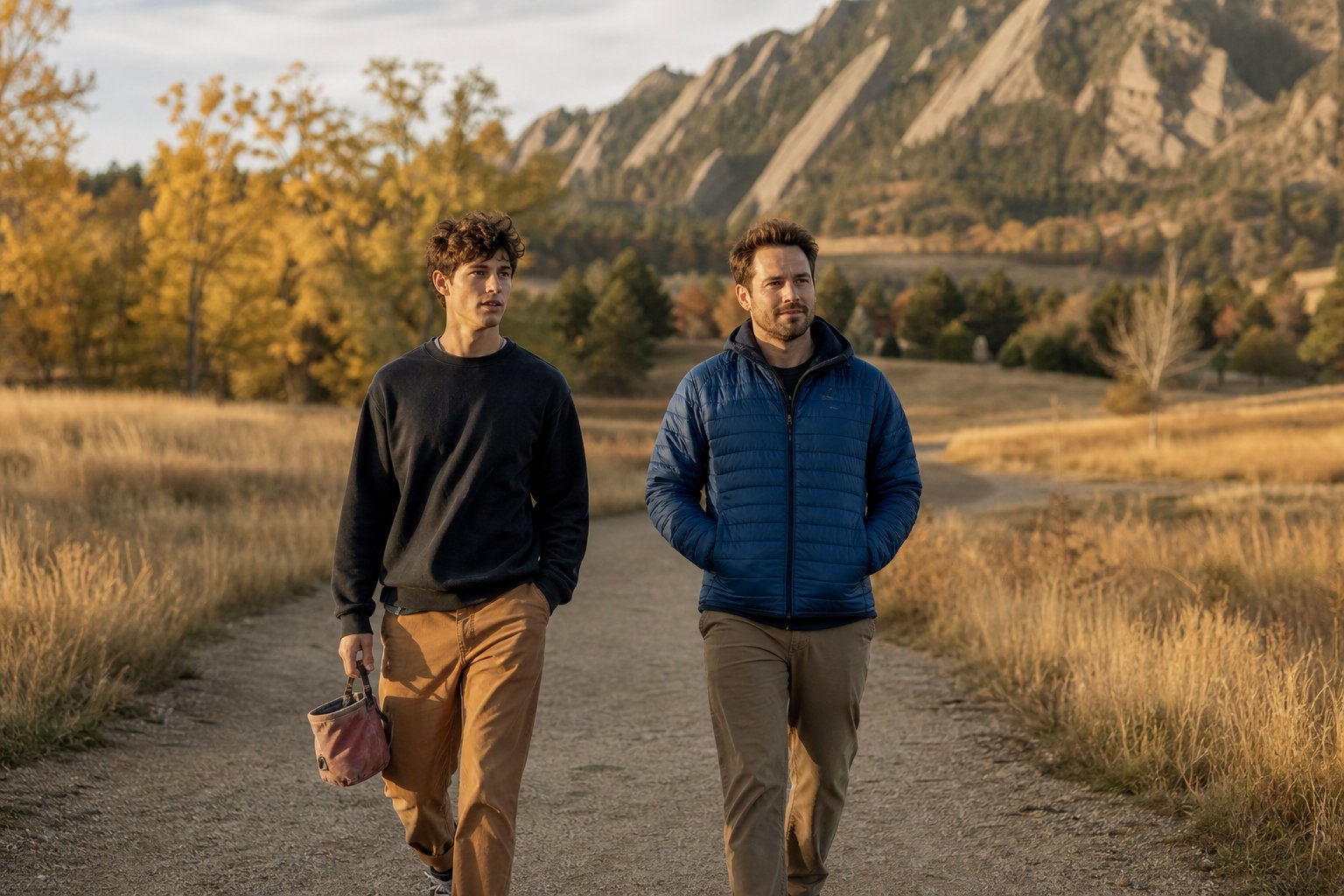
What makes these experiences work isn’t the difficulty for its own sake. It’s the container: an adult who prepared them, witnesses what happens, and reflects it back. That’s the mentor’s role in a rite of passage. Not to protect the young person from challenge, but to make sure the challenge is purposeful and that someone is there when they come out the other side.
The process of building genuine independence in a young person is itself a kind of extended rite of passage. It unfolds not in a weekend, but over months of relationship and real-world experience.
How Mentoring Supports This Transition
Noble Mentors’ experiential programs and community offerings are designed around exactly this framework. We’re not running therapy groups or classroom programs. We’re taking young people into real situations where they encounter real challenge and have a real adult alongside them.
James Farmer, who founded Noble Mentors, has spent years thinking about what young people actually need at this stage of life. His work draws on the same anthropological tradition van Gennep documented: real relationship with an elder who has crossed the threshold, real challenge in the real world, and recognition of what the young person has become.
This looks different for each young person. For a teen who has been avoiding difficulty, it might start with small but real challenges done alongside a mentor who doesn’t rescue them. For an older young adult who has been drifting, it might involve taking on genuine responsibility with someone there to reflect and guide. For a young woman who has never had a woman mentor her through a difficult season, it might be finding that relationship for the first time.
Mentoring works best in concert with therapy, not as a replacement. If your son or daughter is already working with a therapist, the mentor adds what therapy cannot: presence in real life, challenge in the field, and relationship with someone who has lived through what they’re facing. The two approaches work differently and complement each other.
If you’re concerned your young person is drifting through their teens or early twenties without any meaningful threshold to cross, that concern is worth taking seriously. It’s also worth knowing that this is especially acute for young men, though young women face their own version of this absence, and it matters just as much.
What parents can do right now
You don’t have to engineer a vision quest. Start smaller. Find situations where your teenager or young adult has to do something genuinely hard, with a trusted adult in the picture. Let them struggle. Stay close enough to witness, far enough to let it mean something. Afterward, say what you saw. Tell them what changed. That naming matters more than most parents realize.
Questions Parents Ask About Rites of Passage
Is this just for teenagers, or does it apply to young adults in their 20s too?
Both. The classic timing is mid-adolescence, but plenty of young adults in their 20s are still waiting for a genuine passage experience. A 22-year-old drifting without direction may be developmentally in the same place as a 16-year-old who hasn’t yet crossed a real threshold. Age is less relevant than whether the transition has actually happened.
What if my daughter doesn’t seem to want any kind of challenge? She avoids everything hard.
Avoidance is often a sign of underlying anxiety, not indifference. It can also be a sign that no one has offered her a challenge in a container that felt safe enough. The avoidance is worth taking seriously on its own, but it doesn’t mean the developmental need isn’t there. It usually is. She may just need the right relationship and the right context before she’ll risk it.
Do wilderness programs work for this?
Some do. The key is what happens after. A wilderness program that drops a young person back into their regular life without integration, ongoing mentorship, or genuine community recognition may produce a powerful experience that fades fast. The passage has to be received. That’s the part most programs skip. Wilderness therapy can be a valuable start, but it works best as part of a longer arc of support.
My son had a serious trauma in his teens. Can that serve as a rite of passage?
Trauma can break something open, but it isn’t a rite of passage on its own. What’s missing is the container: the prepared elder, the purposeful challenge, the recognition. A young person who went through something hard without guidance often carries the wound without the growth. Good mentorship and therapy can help reframe that experience and support the passage that should have surrounded it.
We’re not a religious family. Do rites of passage have to be spiritual?
No. The elements that make a passage real, namely challenge, guidance, and witness, are not inherently religious. They’re human. Many families have created meaningful threshold experiences around meaningful secular moments: taking on a job, completing a long trip, finishing a difficult program. What matters is that it’s genuine, that an elder is present, and that the community names what happened.
Serving Colorado’s Front Range
Families across the Front Range are asking the same questions you’re asking. Something feels missing in their teenager’s or young adult’s life, and they’re right to notice. Noble Mentors works alongside young people to provide the challenge, relationship, and witness that genuine passage requires.
We serve families in Boulder, Denver, Lafayette, Longmont, Broomfield, and across the Boulder-Denver corridor. We also work with families virtually anywhere in the country.
Based in Lafayette, CO. Schedule a free 40-minute consultation to learn how we can help your family.
About the Author
James Farmer
James Farmer is the founder of Noble Mentors, a therapeutic mentoring organization along Colorado’s Front Range. With over 15 years of experience mentoring teens and young adults through pivotal transitions, James trains and supervises a team of mentors committed to transformation through genuine relationship. He believes that real growth happens not in an office, but in the actual terrain of a young person’s life.