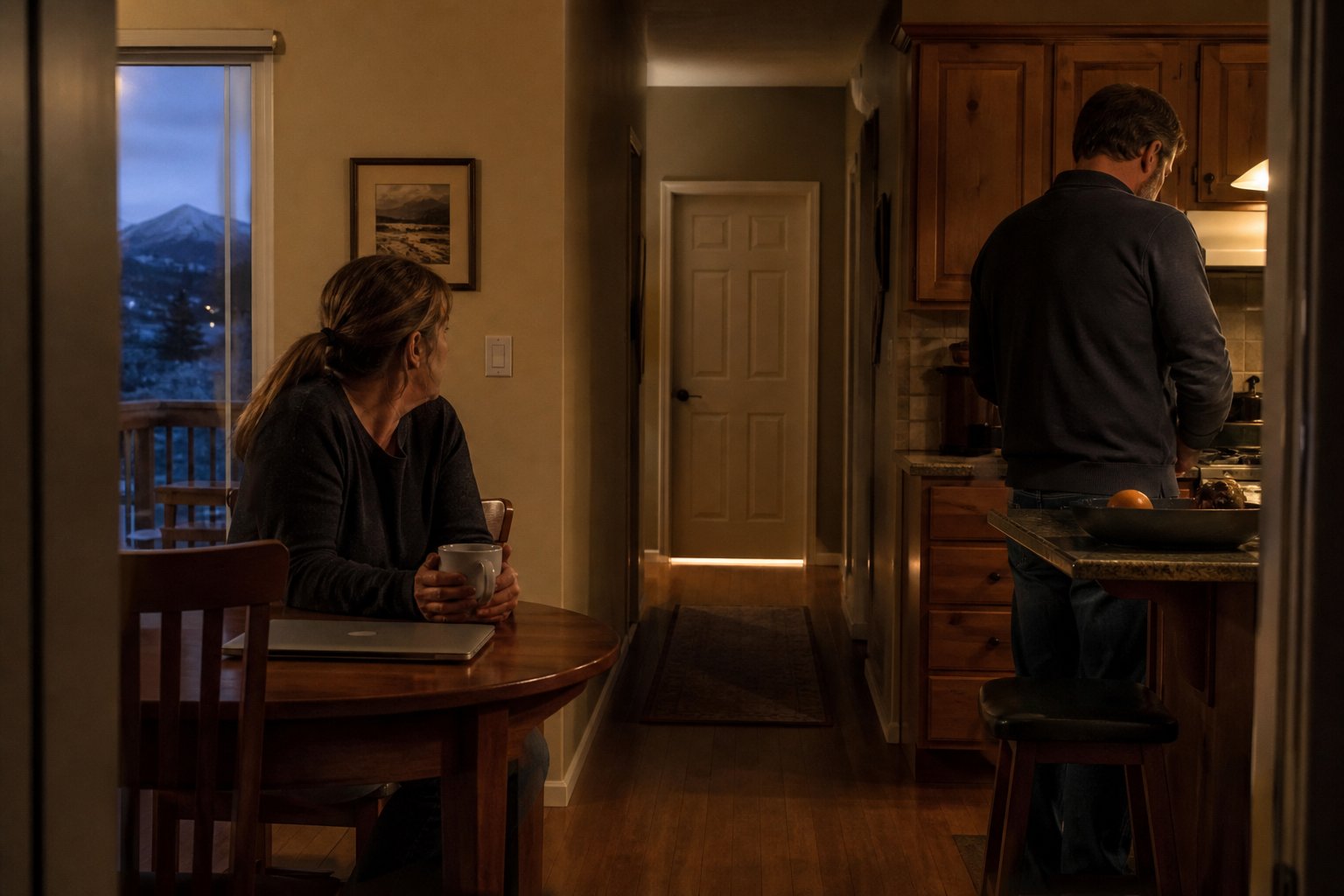

If you’ve lived with a consistently angry teenager, you know the feeling: walking on eggshells in your own home. Bracing yourself for the next explosion. Replaying conversations afterward, wondering what you said wrong. Maybe you have even typed “why is my teenager so angry” into a search bar at midnight.
And underneath all of it — usually — is a question: What is wrong with my kid?
That’s the wrong question. Not because nothing is wrong, but because anger in teenagers almost never is the problem. It’s the signal. Something is happening beneath the surface, and the anger is how it’s finding its way out.
Understanding what’s actually going on doesn’t make the anger easier to live with. But it completely changes what you do about it — and what you don’t do.
Questions parents ask about teenage anger
Is it normal for a teenager to be angry all the time?
Some irritability is normal in adolescence. The brain is rewiring, sleep is short, and everything feels louder. What is not normal is anger that has become the weather in your house: most days, most interactions, with no stretch of ease in between. Constant anger is usually a sign that something underneath it (anxiety, shame, a loss, a struggle at school, a friendship that fell apart) has gone unaddressed. Treat it as information, not attitude.
Why is my teenager so angry and aggressive?
Aggression (slamming, throwing, shoving, threats) is anger that has run out of other exits. It often shows up in teens who cannot yet name what they feel and have no safe place to say it. It needs a firm, calm limit on the behavior and, separately, real curiosity about what is driving it. If there is any risk of someone getting hurt, involve a professional now rather than waiting to see if it passes.
Why is my teenager so angry at me specifically?
Because you are safe. Teens aim their hardest feelings at the person they are most sure will not leave. That does not make it acceptable, and it does not mean you caused it. It does mean the relationship is still intact, which is the thing you build on. A mentor, a coach, or a therapist gives your teen another adult to carry some of that weight, so it is not all landing on you.
What Anger Usually Means (And What It Doesn’t)
Anger is what therapists call a secondary emotion. It arrives on top of something else — often something that feels far more vulnerable: fear, shame, grief, powerlessness, humiliation. The primary feeling is too raw, too exposed, too risky to show. So it comes out as anger instead.
This isn’t conscious. Your teenager isn’t deciding to convert grief into rage. The brain does it automatically, especially the adolescent brain, which is still developing the regulatory capacity to sit with difficult feelings without acting on them.
What this means practically: when your teen explodes at you, they are almost certainly not primarily angry with you. You might be the trigger. But the anger is usually about something older, deeper, or more frightening.
This doesn’t mean anger is never appropriate or that teenagers should be excused from how they treat people. Clear limits on behavior matter — and we’ll get to those. But understanding what anger means changes the lens you bring to it, which changes how you respond, which changes everything.
Common Patterns Parents See
Anger in teenagers doesn’t look the same across all kids. It’s worth naming the different presentations, because they can point to different underlying dynamics:
1 Explosive anger
Sudden, intense, often out of proportion to the apparent trigger. Slammed doors, raised voices, sometimes physical aggression. This is the pattern most parents are desperate to change — and usually the one pointing most directly to an unaddressed emotional wound or an overwhelmed nervous system.
2 Chronic irritability
Not explosive — just perpetually on edge. Snapping at small things, rarely content, easily annoyed. This pattern often points to underlying depression. Many parents miss teen depression entirely because they’re looking for sadness — but in teenagers, depression frequently presents as irritability and withdrawal.
3 Defiant anger
Oppositional, argumentative, refuses direction. Often reads as a power struggle — because it is. But the bid for control is usually a response to feeling profoundly powerless in some other part of life. The family becomes the arena where power is contested.
4 Cold withdrawal
Not explosive — quiet. Complete shutdown, refusing engagement, disappearing into screens or their room. This is anger turned inward, and it can be harder for parents to know how to reach. The silence is a wall, and it usually went up because something felt too dangerous to say out loud.
What’s Usually Underneath the Anger
Every teen’s situation is different, but certain underlying dynamics appear again and again in teenagers who struggle with anger:
Shame. Feeling fundamentally inadequate — not good enough at school, not fitting in socially, believing there’s something wrong with them at a core level. Shame is almost unbearable to carry. Anger is how a lot of teenagers keep from feeling it directly.
Fear and anxiety. The future feels threatening. Social situations feel threatening. Failure feels threatening. A nervous system under chronic threat runs hot. That heat often comes out as anger at the closest available target.
Grief. Losses that haven’t been named or processed — a divorce, a death, a friendship that ended badly, an expectation of themselves that collapsed. Grief in adolescents is frequently mistaken for anger or depression, and sometimes it’s both.
Powerlessness. Teenagers are in a structurally awkward position: old enough to have adult-sized emotions and desires, not yet in control of much of their own life. When that gap between wanting autonomy and not having it gets too large, the frustration has to go somewhere.
Undiagnosed or unaddressed challenges. ADHD, learning differences, sensory sensitivities, mood disorders — many teens who present as angry are actually struggling with something neurological or psychiatric that hasn’t been identified yet. The anger is the visible symptom of an invisible burden.
When you know anger is a signal, you stop trying to eliminate the signal and start asking what it’s pointing to. That shift — from “how do I stop this behavior” to “what is this behavior telling me” — is often where things begin to change.
How Parents Accidentally Escalate It
This section is hard to read. Not because parents are doing something wrong — but because the responses that feel most natural in the moment often make things worse over time.
Meeting anger with anger. When your teenager is raging at you, the impulse to escalate — to match the energy, to hold your ground, to make them back down — is completely human. It’s also almost always counterproductive. Two escalated nervous systems don’t de-escalate each other. They amplify.
Lecturing during a flare-up. The adolescent brain, when flooded with emotion, literally cannot process complex reasoning. Trying to explain the problem, deliver the lesson, or make your point during an explosive moment is physiologically impossible for your teen to receive. They’re not choosing to tune you out — their brain is in a state where that capacity isn’t available.
Taking it personally. When your teen says hateful things in the heat of anger, it lands. Of course it does. But the more personally you take it, the more reactive you become — and the more reactive you become, the more the pattern entrenches itself.
Avoiding all confrontation. The opposite error. Some parents, exhausted by explosions, stop setting any limits at all. The short-term peace this creates is expensive. Teens without clear limits tend to escalate — partly because limits communicate safety, and partly because chronic avoidance teaches the teen that anger is effective.
What Actually Helps
There’s no trick here, no script that defuses every situation. But there are things that consistently move the needle:
Stay regulated yourself. This is the unsexy, foundational thing. Your nervous system is more regulated than your teen’s. That’s the leverage. When you can stay calm in the face of their storm — not cold, not distant, but grounded — it creates the possibility of the storm passing rather than escalating.
Name what you see without diagnosing. Not “You’re acting out because you’re scared.” But: “You seem really frustrated right now. I’m not going anywhere.” Simple presence, without demanding anything from them in return.
Repair after the flare. What happens after the explosion matters more than the explosion itself. Coming back to your teenager when things are calm — acknowledging the rupture, being curious about what happened, staying in connection — this is what builds the relational trust that eventually gives them somewhere to put what they’re carrying besides at you.
Create contexts where they can talk without being studied. Many teens open up in motion — driving, walking, doing something together with their hands. The side-by-side dynamic removes the performance pressure of a face-to-face conversation. If you want connection with an angry teenager, do something with them.
Bring in outside support. Sometimes the family system is too activated for the growth to happen inside it. A trusted mentor, a therapist, a therapeutic mentoring relationship outside the home — someone who can be present with your teen without the full weight of the parent-child dynamic — can reach places you can’t. That’s not failure. That’s strategy.
Parent coaching can also be transformative in these situations — not because something is wrong with you, but because learning to respond differently is a skill, and it helps to learn it with someone who’s seen this pattern many times.
The hardest and most important thing
Your teenager needs you to stay. Not to fix them, not to have the right answer, not to never lose your patience. They need you to keep showing up — even after the hard moments, even when they’ve pushed you away. The consistent presence of a parent who doesn’t leave is one of the most regulating things in a struggling teen’s world.
When Anger Signals Something Bigger
Most teen anger falls within a range that responds to the approaches described above. But there are situations where the anger is pointing to something that needs professional attention.
Take the anger seriously as a symptom — not just a behavior problem — when:
The violence is escalating. Anger that involves physical aggression toward people, destruction of property, or threats of harm to themselves or others needs immediate professional support. This is beyond what mentoring or parent coaching alone can address.
There are other significant warning signs alongside the anger. Substance use, withdrawal from all relationships, talk of hopelessness or not wanting to be alive, significant drop in functioning — any of these, combined with intense anger, indicate a level of distress that warrants evaluation.
The pattern has been going on for years without any change. Chronic, entrenched anger that doesn’t respond to anything — connection, limits, changed family dynamics, outside support — sometimes points to an underlying condition that needs diagnosis and treatment.
Your own safety or your family’s safety feels at risk. This is always the line. If the anger has crossed into something dangerous, that’s not a mentoring situation — that’s a clinical situation, and the first step is ensuring everyone is safe.
If you’re not sure which category you’re in, a consultation with a professional who knows adolescent development can help you get clear. You shouldn’t have to figure that out alone.
About the Author
James Farmer
James Farmer is the founder of Noble Mentors, a therapeutic mentoring organization along Colorado’s Front Range. With over 15 years of experience mentoring teens and young adults through pivotal transitions, James trains and supervises a team of mentors committed to transformation through genuine relationship. He believes that real growth happens not in an office, but in the actual terrain of a young person’s life.
Read Next
When Your Teen’s Behavior Feels Out of Control: What’s Really Going On
When parents describe their teenager as “out of control,” there’s […]