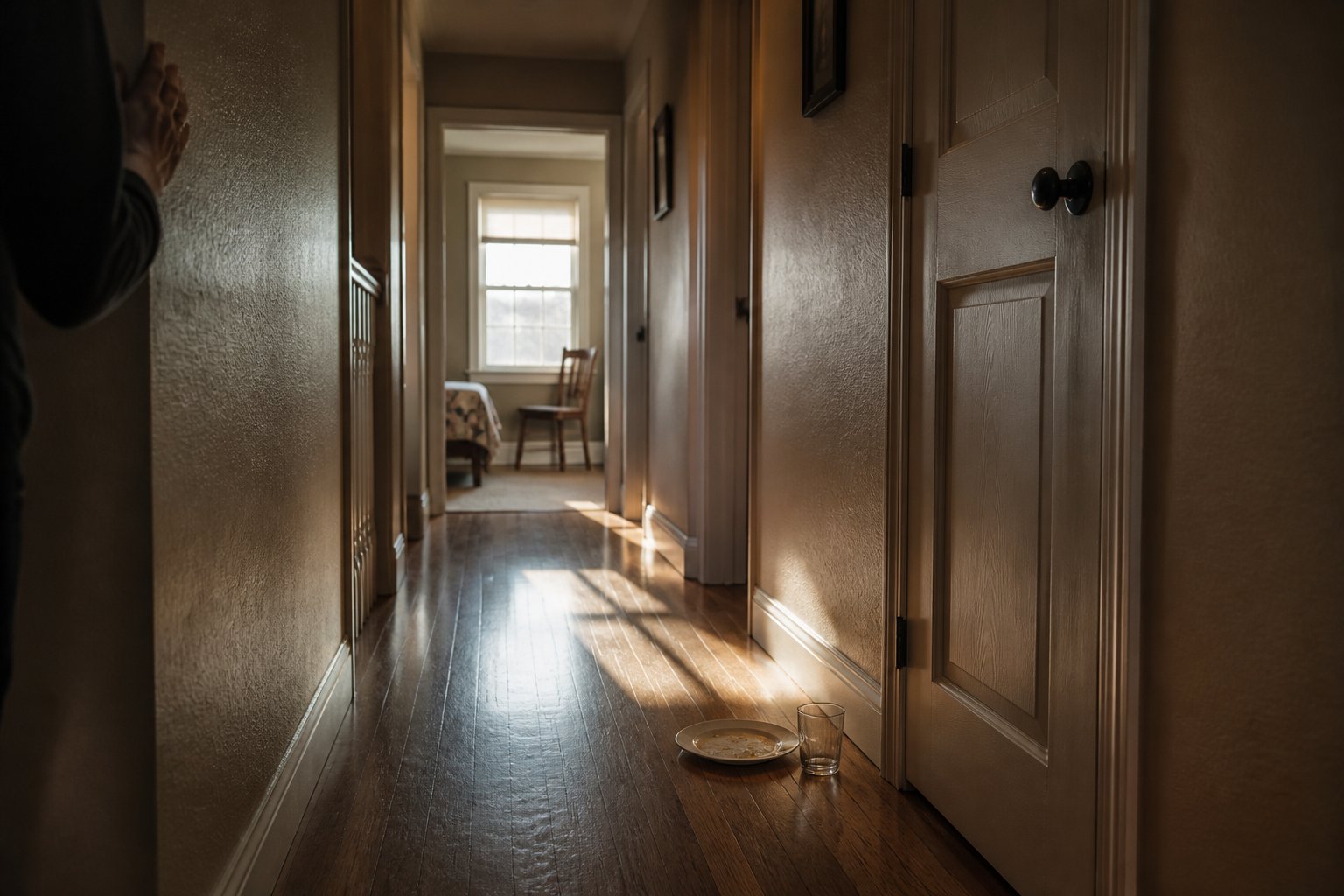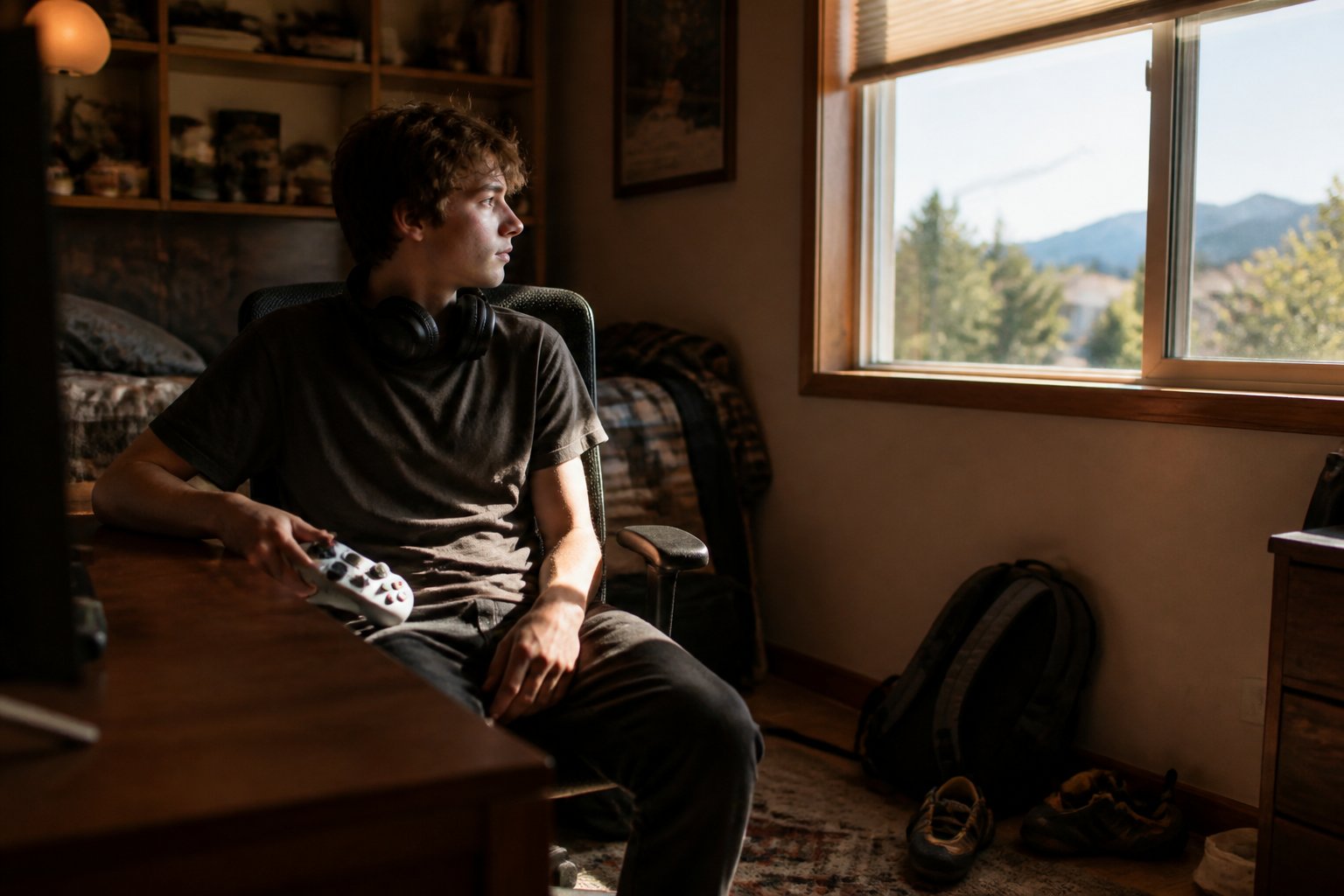
Your son has ADHD, and the only place he seems to function is inside a game. Homework takes three hours of nagging and produces half a page, but he will run a four-hour raid with a headset on, coordinating six people and never once losing the thread.
You have read about ADHD and gaming addiction, and you are not sure which one you are looking at anymore. Is the gaming the problem, or the one thing holding him together? Usually it is both, and understanding why is the first step toward something that works.
What ADHD and gaming addiction look like together (and what they don’t)
Not every ADHD kid who games a lot has a gaming problem. Plenty of teens with ADHD play for hours on a Saturday, log off for dinner grumbling, and still show up to school, keep a friend or two offline, and get excited about things without a controller. That is a hobby.
The pattern parents are describing when they search “ADHD gaming addiction” is different. Gaming has become the only reliable source of relief. Everything outside the game feels flat or humiliating, and everything inside it feels clear. Sleep, school, and friendships bend around the screen, and when the screen goes off, the mood in the house goes with it.
The World Health Organization now lists gaming disorder in the ICD-11: impaired control over gaming, gaming taking priority over other interests, and continuing despite clear harm, usually over at least twelve months. The WHO is careful to say this affects only a small share of people who play. You are not looking for a label. You are looking at whether the game is running your kid’s life.
To be plain: nobody at Noble Mentors makes that diagnosis. A psychiatrist, psychologist, or clinical social worker does. We help with what comes next.
Why video games work so well on an ADHD brain
The ADHD brain is not broken. It is wired for a different environment than a classroom or a kitchen table, and video games happen to be that environment. This is not an excuse. It is the reason the gaming makes sense.
1 Feedback arrives instantly
In a game, every action gets an answer within a second. CHADD puts it well: a shorter wait between seeking stimulation and receiving it matters even more to the ADHD brain than the type of stimulation. An essay offers feedback in two weeks. A game offers it constantly.
2 The goals are clear and the progress is visible
ADHD makes it hard to hold a distant goal in mind and break it into steps. Games do that work for you: a quest log, a progress bar, a next thing that is always obvious. “Get into college” is a fog. “Clear this dungeon” is a plan.
3 Dopamine on demand
ADHD involves a reward system that runs a little low and needs more to feel engaged. Games deliver small, frequent, unpredictable rewards, exactly what an under-rewarded brain is hunting for. Your kid is not weak-willed. He found the one thing in his day that makes his brain feel right.
4 Hyperfocus is finally rewarded
At school, the ADHD ability to lock in for hours gets called “not paying attention to the right thing.” In a game, it gets called being good. For a kid who has spent years hearing what he does wrong, it might be the only place he feels competent all week.
Put those four together and you have both a relief and a trap. Relief, because the game gives the ADHD brain what the rest of the day withholds. Trap, because the more relief he gets from the screen, the flatter everything else feels beside it.
What the research says about ADHD and gaming addiction
The link is real, and it is not small. A 2023 meta-analysis in Clinical Psychology Review pooled 48 studies and found a moderate, consistent association between ADHD symptoms and gaming disorder, with inattention slightly more strongly tied to problem gaming than hyperactivity. The abstract of the Koncz and colleagues review is free to read.
Here is the part to hold loosely. Almost all of those studies look at one moment in time. They show that the two travel together. They do not prove that gaming causes ADHD (it does not) or that ADHD makes addiction inevitable (it does not). What they support is what you see at home: an ADHD brain is more drawn to games and slower to stop.
CHADD adds a piece parents notice but rarely hear explained. After long stretches of intense screen time, the brain’s reward system can temporarily downshift, so ADHD symptoms often look worse for hours afterward. The kid who comes off a six-hour Saturday and cannot tolerate a single request is not being defiant. His brain is recalibrating.
With ADHD, the game is not just entertainment. It is the one place the brain gets the structure, feedback, and reward it needs to feel regulated. So the goal is not to take the regulation away. It is to help your kid find more places to get it, until the game is one of several.
Why “just take it away” backfires harder with ADHD
You have probably tried it. The console goes in the closet, the router gets a timer, the phone sleeps in your bedroom. For a lot of families, what follows is not a calmer house but a worse one: a kid who is agitated, hopeless, sleeping badly, and no more interested in school than before. Some parents give the games back within the week just to get their kid back.
That is not weakness on your part. With ADHD, gaming is often doing a job nothing else in the kid’s life is doing yet. It regulates his attention, his mood, and his sense of being good at something. Pull it out without replacing that job, and regulation collapses.
Parents get a few other things wrong, and every one is understandable. Treating the gaming as the cause when it is more often the symptom of an ADHD brain under-supported everywhere else. Lecturing about wasted potential, which lands as one more list of what he cannot do. Negotiating limits at 11 p.m., when neither of you has any executive function left.
None of this means limits are wrong. It means limits alone, delivered as punishment, rarely break the ADHD and gaming addiction cycle. They just move the fight.
What actually helps an ADHD teen who games too much
What works is slower than confiscation and more durable. It has four parts.
First, treat the ADHD. If your kid was evaluated at eight and nothing has been revisited since, start there. Medication, when it fits, does not cure gaming, but it can lower the baseline hunger for stimulation that makes the game so hard to leave. Coaching handles the skills side: task initiation, time awareness, tolerating boredom. Our post on ADHD coaching for teens covers that.
Second, build offline competence. Not “activities.” Competence. Your kid needs one thing outside the screen where he is actually good and can feel it: bouldering, cooking, a drum kit, a job at a bike shop. The ADHD brain will not trade a place where it wins for a place where it is merely supervised. It will trade one place where it wins for another.
Third, put structure around the gaming rather than against it. Gaming after the two hardest tasks of the day, not before. A stop time agreed on Sunday afternoon, not argued at midnight. Screens out of the bedroom, because nothing makes ADHD worse than a 3 a.m. bedtime. Sequence and predictability matter more than hours.
Fourth, one trusted adult who is not you and not a therapist. For an ADHD teen, the route out of the game usually runs through it: someone who will play with him, respect that he is good at it, and over weeks become the reason he wants to do something else. That is what a mentor does.
What parents can do right now
This week, ask your kid to show you the game. Sit for twenty minutes, let him teach you, and notice what he is actually doing in there: planning, leading, persisting. Then make one change to the structure, not the amount, and hold it for two weeks before touching anything else. If a clinician has not looked at the ADHD in years, book that appointment.
How Noble Mentors helps with ADHD and gaming addiction
Our gaming and screen addiction support starts where your kid actually is, which is often inside the game. A mentor will play with him, learn the game he cares about, and treat his skill there as real, because it is. From there, the mentor widens the world: a climbing gym, a trail, a job application filled out together in a coffee shop. The game does not disappear. It gets company.
Because ADHD is usually underneath, we work on both at once. Our ADHD coaching builds the structure that makes stepping away possible: a morning without a fight, a plan for the two hard tasks, a way to see time passing. Mentors coordinate with your kid’s therapist or prescriber, with clinical oversight from Joseph DeNicholas, LCSW, our Clinical Director. What we do is not therapy, and we will say so if therapy needs to come first.
Beni Oren works virtually with teens and young adults on screen overuse, and his approach is not to take the habit away but to replace it with something meaningful enough that it becomes unnecessary. For a kid whose whole social life runs through Discord, a mentor who meets him online first is often the only help he will accept.
Honest limits: we do not evaluate for ADHD or gaming disorder, we do not prescribe, and a mentor is not a substitute for treatment in a crisis. For the wider picture on gaming and screen addiction in teens generally, our posts on video game addiction in teens and screen addiction in teens cover the signs and the family fights.
Questions parents ask about ADHD and gaming addiction
Are kids with ADHD more likely to get addicted to video games?
Yes, the research supports a real and moderate link. A 2023 meta-analysis of 48 studies found that ADHD symptoms, especially inattention, are consistently associated with more severe gaming disorder symptoms. That does not mean every ADHD kid who games is headed for addiction; most are not. It means gaming addiction in teens with ADHD deserves closer attention than it usually gets.
Does gaming make ADHD worse?
Gaming does not cause ADHD. Long, intense sessions can make symptoms look worse for a while afterward, because the reward system downshifts after a heavy stretch of stimulation, and sleep lost to late-night gaming compounds it. Structure around when and how long, plus screens out of the bedroom, addresses most of this.
Should I take the games away completely?
Usually not. With ADHD, a sudden total removal often makes the house worse, because the game is doing a regulating job nothing else is doing yet. The exceptions are safety situations or a clinician’s recommendation for a supervised break. The better move for most families is to change the structure around gaming and build offline competence while the ADHD gets treated.
Can a mentor help my ADHD teen with gaming?
Often, yes. A mentor can meet your teen inside the game, earn trust by respecting what he is good at, and then become the reason he wants to try something outside it. A mentor is not a clinician and does not treat ADHD or diagnose gaming disorder, so the work fits best alongside a prescriber or therapist, not instead of one.
If any of this sounds like your house, schedule a free 40-minute consultation and we’ll talk it through. If we’re not the right fit, we’ll point you to who is.
Serving Colorado’s Front Range
If your ADHD teen or young adult is living inside a game and the limits keep turning into fights, a mentor who can meet him there and then walk him back out is often the missing piece. We pair gaming and screen support with ADHD coaching so the structure and the relationship grow together.
We work with families in Broomfield, Longmont, and across the Boulder to Denver corridor, in person. Parent coaching and much of our mentoring are also available virtually anywhere in the country.
Based in Lafayette, CO. Schedule a free 40-minute consultation to talk through what support could look like for your family.
About the Author
James Farmer
James Farmer is the founder of Noble Mentors, a therapeutic mentoring organization along Colorado’s Front Range. With over 15 years of experience mentoring teens and young adults through pivotal transitions, James trains and supervises a team of mentors committed to transformation through genuine relationship. He believes that real growth happens not in an office, but in the actual terrain of a young person’s life.
Read next
American Hikikomori: When Your Young Adult Hasn’t Left Their Room in Months
When gaming and withdrawal go on long enough that the bedroom becomes the whole world, here is what that looks like in an American house and how families get someone back out.