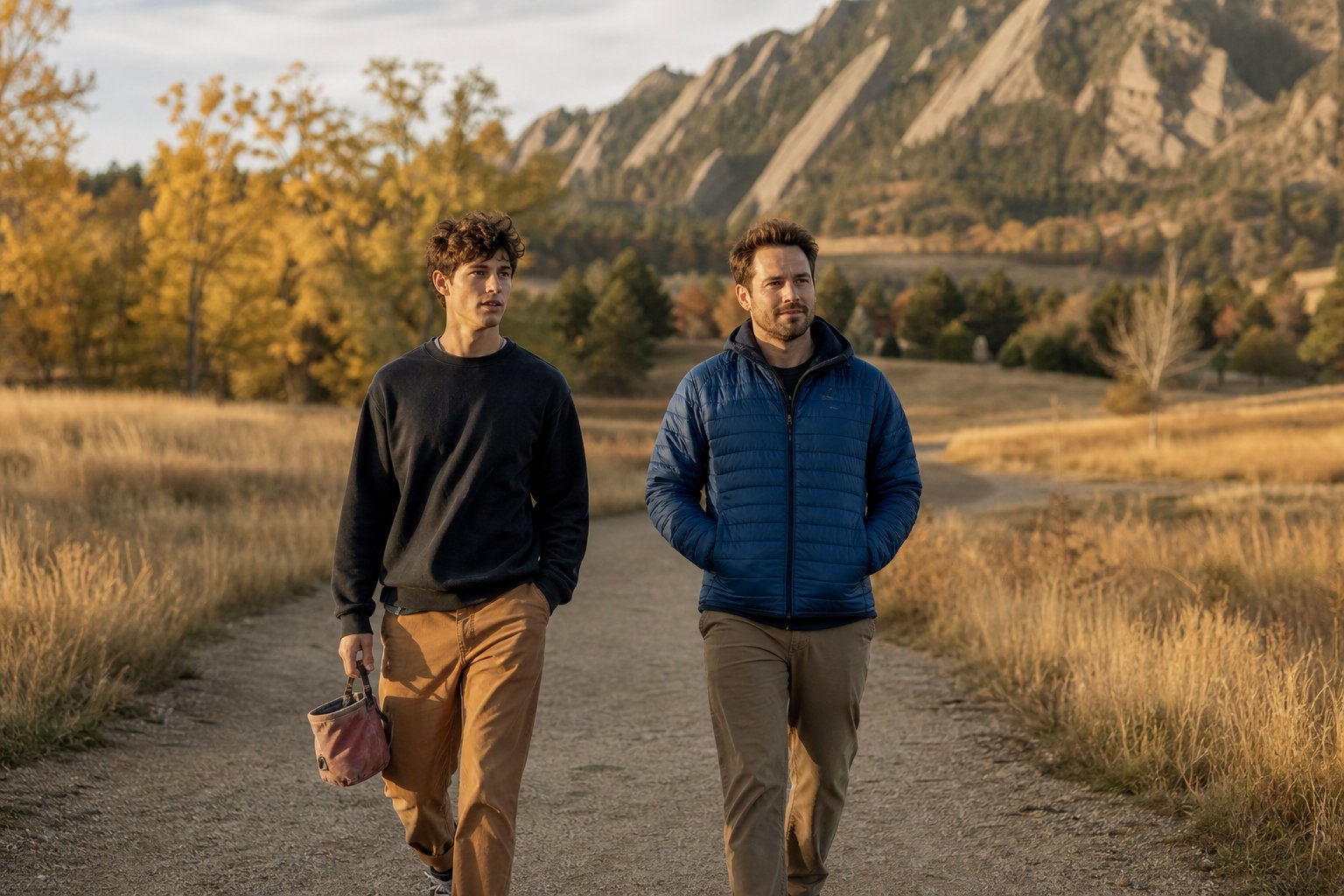

What Is a Rite of Passage?
Every culture, in every corner of human history, has recognized a threshold between boyhood and manhood. They called it by different names — initiation, passage, ceremony, descent. But the structure was always the same: a young man was taken out of ordinary life, brought to the edge of what he knew, and returned transformed. Not the same person who left. Something had died. Something had been born.
A rite of passage is not a graduation party. It is not a camping trip. It is a deliberate, held experience — guided by men who have already walked across that threshold — in which a young man confronts himself, strips away what is false, and discovers what remains. The wilderness is not a backdrop. It is the teacher.
The rite has three movements: separation from the old identity and the familiar world; threshold, the liminal space of not-knowing, discomfort, and depth; and return, the integration of what was found and the recognition of the community. Each movement matters. None can be skipped.
This is one of the oldest technologies humanity has for growing men. And we have largely abandoned it.
Why Modern Young Men Are Missing It
Modern culture has stripped the rite of passage down to a diploma and a car. Or perhaps a beer at 21. These gestures are well-intentioned, but they don’t reach the soul. They don’t ask anything of the young man. They don’t require him to reckon with who he is — to sit in the dark, to face his fear, to discover what he is made of when the noise of ordinary life falls away.
What we see at Noble Mentors, week after week, is the consequence: young men in their late teens and twenties who are technically adults but haven’t been initiated into adulthood. They are intelligent, sensitive, often gifted — and they are adrift. They don’t know what they stand for. They don’t trust their own instincts. They haven’t been given a story about what manhood means that’s worth living into.
This isn’t a character flaw. It’s a structural gap. The elders haven’t shown up. The village hasn’t held the ceremony. The threshold has been left unmarked.
That gap is what Noble Mentors is here to help close.
How Noble Mentors Approaches Rites of Passage
We don’t offer a single program and call it done. Initiation is a living process — it unfolds over months, sometimes years, in the context of relationship and community. Our approach has four interlocking elements:
🏔 Wilderness Retreats
Multi-day immersions in the Colorado backcountry, structured around the classical rite of passage arc: separation, threshold, and return. These are not survival courses or extreme adventures. They are held, intentional experiences designed to open something in a young man that ordinary life keeps closed.
👥 Men’s Groups
Weekly or bi-weekly circles where young men practice being honest, being seen, and being held accountable to the version of themselves they said they wanted to become. The group is not therapy — it’s a training ground for the kind of masculine depth that makes life worth living.
🧭 Mentored Threshold Crossings
Significant transitions in a young man’s life — high school to college, college to independent adulthood, crisis points where the old identity no longer fits — are walked with a mentor who helps name what is dying and what is being born. These moments deserve more than a checklist. They deserve witness.
🌿 Seasonal Ceremonies
Solstice and equinox gatherings, council fires, initiation anniversaries. The cycle of seasons provides a natural rhythm for reflection, recommitment, and community. We mark what matters because the things we don’t mark, we tend to forget.
What a Wilderness Retreat Looks Like
We work in the Colorado mountains — the high desert, alpine meadows, river canyons. The land itself is part of what holds the retreat. No wifi. No schedule to optimize. Just a young man, the wilderness, and the guides who have agreed to walk with him.
Retreats typically run three to five days. They begin with preparation — intention-setting, conversation with guides, the deliberate act of laying down the phone and the persona. Then comes the threshold period: solo time in nature, a vigil, a fast if appropriate. Not extreme. Not manufactured difficulty. The kind of stillness and aloneness that allows a young man to hear himself.
The men gather each evening around fire. Stories are told. Challenges are named. There is laughter and there is silence and there is the rare experience of being truly known by other men without having to perform.
The return home is structured, not abrupt. What the young man discovered in the wilderness needs to be named, honored, and integrated into the life he goes back to. This is the work of the days and weeks following the retreat — and it is where the real transformation takes root.
Retreats are small by design — six to ten participants — so every man is known. Guides are experienced, trained in wilderness first aid, and rooted in a personal practice of the work they are offering.
Men’s Groups and Ongoing Community
The rite of passage is not an event. It is an opening. What you do with the opening is what matters — and that requires community.
Noble Mentors runs ongoing men’s groups on the Front Range for young men who are ready to practice being honest, being seen, and showing up for each other over time. The men who have been through a wilderness rite of passage often find these groups to be the first place they’ve belonged since boyhood — the first place where depth is welcomed and performance is unnecessary.
What happens in a men’s group? Men check in on what is actually true in their lives. They name what they are avoiding. They practice receiving honest feedback without collapsing or defending. They hold each other to the commitments they have made. Over time, they build the kind of brotherhood that most men spend their entire lives quietly longing for.
Older men mentor younger ones. The transmission of hard-won wisdom from elder to initiate — that ancient thread — stays alive in these circles. This is how cultures used to work. It still works, when you create the conditions for it.
Who This Is For
Wilderness rites of passage and men’s rites of passage work are not for everyone at every moment. They are for:
Young Men Ages 15–25
Adolescents and young adults who are standing at the threshold of a new chapter — graduation, identity formation, direction — and who haven’t been given a meaningful way to cross it. Not broken. Not lost. Just uninitiated, and ready.
Young Men at Transition Points
High school to college. College to adult life. The end of a relationship, a job loss, a crisis of faith. Any moment when the old story no longer fits and a new one hasn’t formed yet. These are initiatory thresholds. They deserve to be met with intention.
Fathers Wanting Something Real for Their Sons
Fathers who feel the weight of what their sons are missing. Who sense that a trip to the mall or a graduation dinner isn’t the thing. Who want to give their son a genuine rite of passage but don’t know how to build one — and are wise enough to know they may not be the right person to lead it.
We serve Boulder, Denver, and the Colorado Front Range — and take men into the Colorado wilderness for retreats throughout the year. Home base: Lafayette, Colorado.
Ready to explore a rite of passage for your son?
We offer a free conversation to explore whether a rites of passage retreat, men’s group, or mentored threshold experience is the right fit. No programs to sell. Just a real conversation about what your son is facing and what might actually help.
Related: Mentoring for Young Adults (20–29) — the rite of passage, rebuilt for the modern launch into adulthood.
Noble Mentors
Real help for this exact struggle
If this article hits close to home, our Rites of Passage & Experiential Programs page shows exactly how we walk alongside families like yours. Or start with an overview of therapeutic mentoring for teens and young adults.