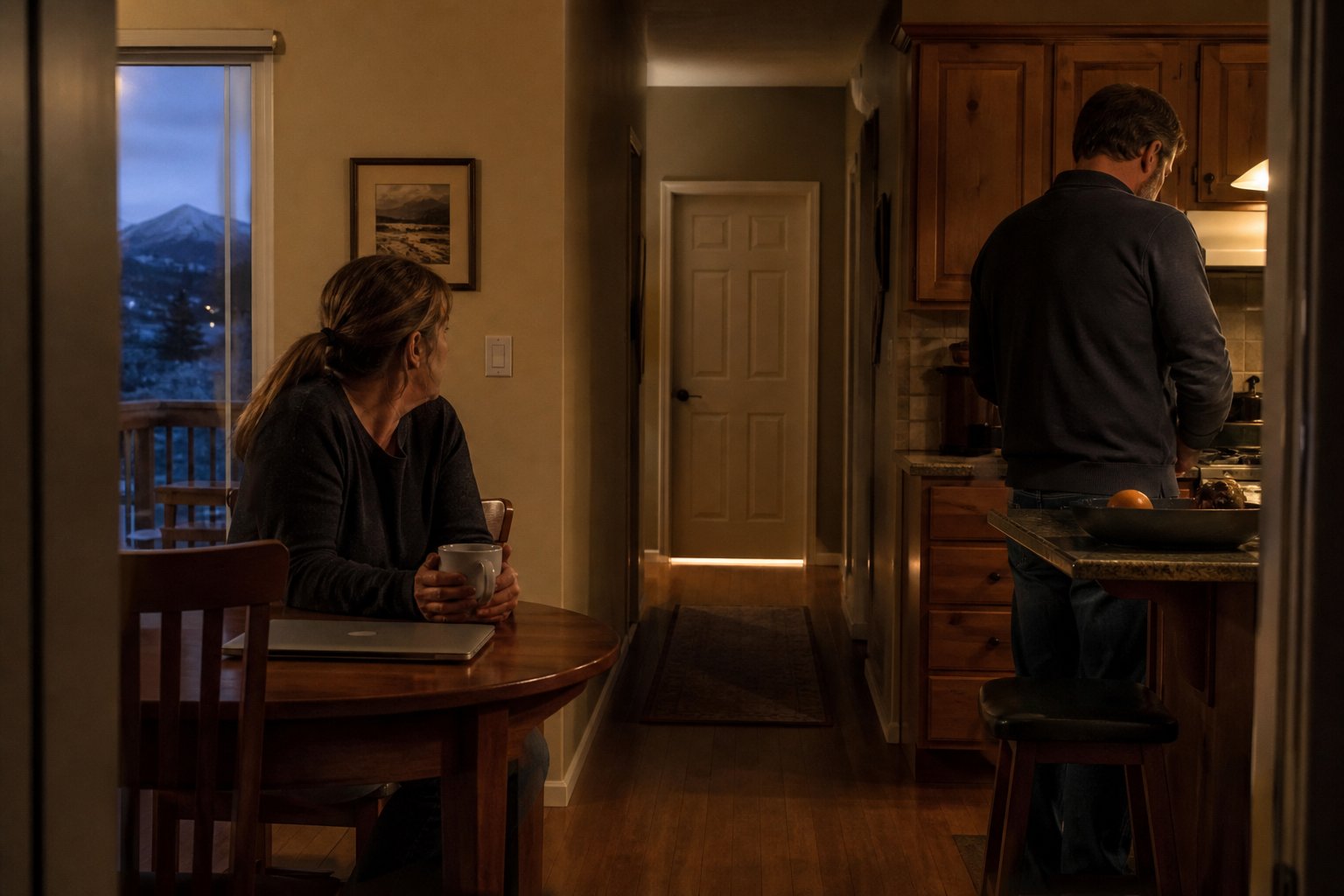

You had hope when therapy started.
You found a good therapist. Your teen agreed to go. The sessions were happening, week after week, and something felt like it was finally moving in the right direction.
But months have passed — maybe a year — and something still doesn’t feel right. Not that therapy is bad. Their therapist is thoughtful, your teen doesn’t dread going, and you’ve seen glimpses of real insight. They can talk about their anxiety now. They know what triggers them. They have language for things they never had language for before.
And yet.
They still can’t get out of bed on school mornings. The isolation continues. The basic life skills that other kids their age seem to be building? Not happening. You’ve become the person translating therapy into daily life — repeating what the therapist said, prompting every next step, holding the whole structure together. You’re exhausted. And underneath that exhaustion is a quiet, persistent question you’re almost afraid to ask:
Is this enough? Is something missing?
That question doesn’t make you ungrateful for therapy. It doesn’t mean the therapist failed. It means you’re paying attention. And in my experience, when a parent asks that question — really asks it — they already know the answer.
The Gap Between the Therapy Room and Real Life
The therapy room is where insight happens. It’s a protected, carefully held space designed to do one thing: help your teen understand themselves more deeply. That work is real, and it matters. Therapy addresses patterns, trauma, thought distortions — the clinical dimension of what’s happening inside.
But life is where change has to land.
Understanding anxiety is not the same as managing it at 7 AM before school. Recognizing avoidance patterns is not the same as overcoming them when a job application stares you in the face. Insight — genuine, hard-won, therapeutic insight — does not automatically translate into function.
That gap between understanding and living is not a failure of therapy. It’s a limitation of what one hour per week in an office can reach.
Research confirms what parents already sense: between 20 and 30 percent of children in the US need psychological services, and even among those who receive care, the clinical work often doesn’t touch daily functioning, relationship-building, and the practical skills of adult life. Teens need both dimensions addressed — not as either/or, but as a coordinated whole.
When that coordination is missing, teens get stuck at the threshold. They understand themselves better, but they can’t seem to move.
7 Signs Your Teen May Need More Than Therapy
If you’ve been carrying a quiet worry that something is missing, these signs may help you name it.
1. Therapy Insights Aren’t Translating to Daily Behavior
Your teen can articulate their anxiety with real sophistication. They know their triggers. They’ve done the work in session.
But they still can’t leave the house, manage a morning routine, hold down a part-time job, or initiate social contact. The insight exists. The application doesn’t. This gap — between what they understand and what they can actually do — is one of the clearest signs that something beyond therapy is needed.
Skills don’t build themselves through understanding. They require practice, support, and a real-world environment where someone is present with them as they try.
2. Daily Functioning Is Still Significantly Impaired
School attendance, basic hygiene, regular meals, meaningful social contact — these are the foundations of a functioning life. If these are still falling apart after months of therapy, that’s a signal worth paying attention to.
It doesn’t mean your teen isn’t trying. It often means the support they need exists in a different form — not in a weekly session, but woven into the actual fabric of their days.
3. Progress Has Plateaued
Therapy can plateau. This is normal and doesn’t mean therapy has failed. But when a teen has been sitting at roughly the same place for six months — same struggles, same limits, same pattern of insight-without-movement — something in the approach needs to expand.
Often what’s needed isn’t a different therapist. It’s a different layer of support that picks up where therapy stops: in the world, in relationship, in the daily moments therapy can’t reach.
4. Social Isolation Is Getting Worse, Not Better
Isolation is one of the most dangerous patterns for developing teens. And it’s one of the hardest to address from an office.
Therapy can help your teen understand why they pull back from connection. But rebuilding the capacity for friendship, trust, and social risk requires real-world practice with a real person who isn’t a clinician — someone who can be present in ordinary moments and help your teen gradually widen their world.
If your teen isn’t taking social risks, building new relationships, or engaging in activities outside the home — and this has persisted despite good therapy — that’s a meaningful sign.
5. They Need More Than 50 Minutes Per Week
Some teens need daily support. Not necessarily clinical support — daily therapy would be overwhelming for most, and unnecessary. But a consistent adult presence through the week: someone who can hold structure, offer accountability, check in when things get hard, and show up in the moments that actually matter.
The weekly therapy hour is a container, not a lifeline. For some teens, one hour of insight-focused work per week, with nothing structured in between, leaves an enormous gap that the family — usually the parents — ends up filling.
That isn’t sustainable. And it isn’t the role therapy was designed to play.
6. Real-World Skills Are Falling Behind Peers
Driving. Cooking. Managing money. Applying for jobs. Making a doctor’s appointment. Navigating a conflict with a roommate or coworker.
These are not minor skills. They are the infrastructure of adult independence — and each year that passes without building them makes the gap larger and harder to close. For many teens who are struggling, these skills don’t build through information or parental instruction. They build through doing, alongside someone trusted who can support without rescuing.
If your teen is falling further behind peers in these concrete markers of growing independence, that’s worth addressing directly — not by increasing pressure, but by finding the kind of support that can actually meet them where they are.
(For more on this specific challenge: Executive Function Support for Young Adults and Failure to Launch)
7. You’ve Become the Primary Bridge Between Therapy and Life
This is the sign that stops parents in their tracks when they hear it named.
You relay what the therapist said. You prompt every next step. You manage the schedule, absorb the meltdowns, and hold the whole structure together. You’re not just supporting your teen — you’ve become the connective tissue between their clinical work and their daily functioning.
That role is exhausting you. And it’s not working — not because you’re not trying hard enough, but because it’s not a role one parent was designed to carry indefinitely.
If this resonates, you need support too — not just your teen. (More on the parent’s role in this process: From Control to Connection: Strengthening Communication with Your Teen or Young Adult)
Noble Mentors
Real help for this exact struggle
If this article hits close to home, our Therapeutic Mentoring page shows exactly how we walk alongside families like yours. Or start with an overview of therapeutic mentoring for teens and young adults.