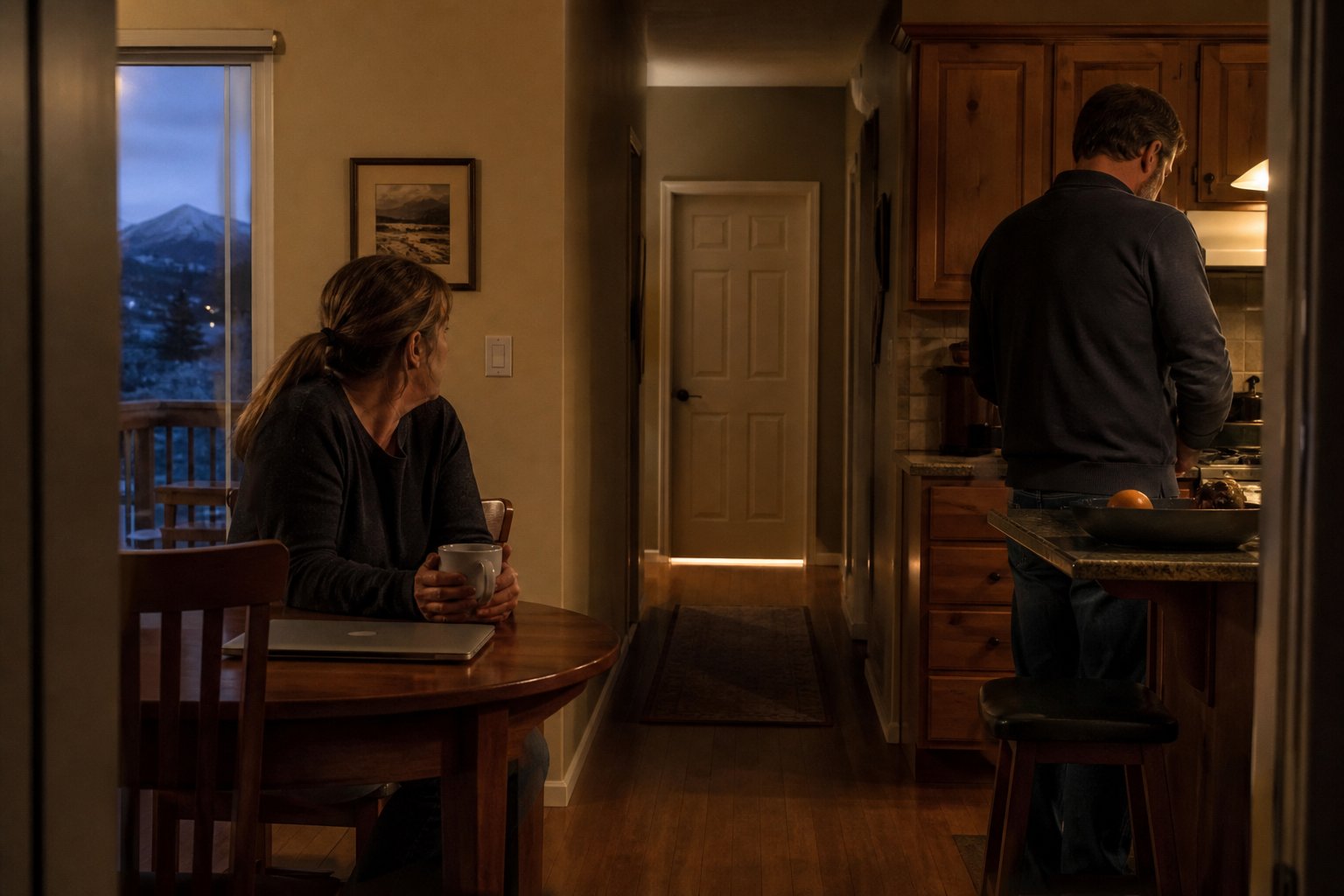

Anxiety doesn’t stay in the therapy room. It follows young adults to job interviews, to first apartments, to social gatherings they’ve rescheduled three times. It lives in the parking lot before going inside, in the unanswered texts, in the opportunities quietly declined because the cost of showing up felt too high.
If you’re a therapist, you’ve seen this. Your client does real work in session. They understand their patterns, can name their triggers, have built a solid therapeutic relationship with you. And still — life outside the office isn’t changing the way it should. The anxiety hasn’t followed their insight.
If you’re a parent, you’re watching it happen in real time. Your son or daughter is not lazy, not defiant, not indifferent to their own life. They’re struggling with something that therapy alone hasn’t fully reached. And you’re not sure what comes next.
This post is for both of you — and for the young adult who might be reading this themselves, wondering if something more is possible.
Why Anxiety Looks Different in Young Adults
Anxiety in young adults is not simply an amplified version of childhood worry. The developmental context is different — and that changes everything about how anxiety manifests and what it needs.
The years between 18 and 26 are among the most identity-generating of a person’s life. Young adults are answering questions that don’t have answers yet: Who am I becoming? Where do I belong? Am I capable of building a real life? That uncertainty isn’t pathology — it’s developmentally appropriate. But for someone with an anxious nervous system, that level of open-endedness can become paralyzing.
What clinicians and parents often see isn’t classic worry. It’s avoidance. Shutdown. Irritability when pressed. A pattern of starting strong and then disappearing. A young adult who can articulate exactly what they want and exactly why they’re not doing it — and who is still not doing it.
The existential weight of this stage compounds the clinical picture. It’s not just “I’m anxious about the interview” — it’s “I’m anxious about the interview and whether I’m capable of having a career and whether I’m falling behind everyone else and whether I’m fundamentally broken.” Anxiety in young adulthood runs deep because the stakes feel total.
What Current Treatment Approaches Offer — and Where the Gap Appears
The primary evidence-based treatments for anxiety — CBT, DBT, EMDR, medication — work. They help young adults understand the cognitive distortions driving their anxiety, regulate their nervous systems, and process the experiences that wired their threat responses in the first place. For many, these approaches produce meaningful, lasting change.
But there’s a gap that clinical work is structurally limited in addressing, and it’s worth naming honestly: insight developed in a session doesn’t automatically transfer into behavioral change in real life.
“I know what I should do” is not the same as being able to do it at 8:45 on a Tuesday morning when everything in your body is telling you to turn around. Therapy builds the map. But the anxious young adult often has no one beside them when they’re actually navigating the terrain.
This isn’t a failure of therapy — it’s a limitation of context. The therapeutic relationship is one of the most healing containers a person can have. It’s also a container with walls. What happens outside those walls, in the unpredictable texture of actual life, is where anxiety treatment often reaches its ceiling.
The Role of Real-World Practice in Anxiety Treatment
Exposure-based approaches are among the most effective interventions for anxiety — and the research is clear that exposure is most effective when it happens in the context where the anxiety occurs — and for OCD specifically, our OCD support with mentors trained in ERP and CBT takes that same principle into the home and community. Imaginal rehearsal and in-session processing are important foundations. But they are foundations, not the building.
What therapeutic mentoring adds is scaffolded real-world exposure — accompanied. There is a categorical difference between being told to go to the networking event and being accompanied by a trusted adult who knows your history, respects your limits, and can help you debrief in real time. The scaffolding isn’t forever. It’s a bridge.
Small wins accumulate. The anxious young adult who turns around in the parking lot fifty times eventually turns around one fewer time — and then one fewer after that. Each completed challenge, however modest, adds a data point to a story that has mostly been evidence of avoidance and failure. Over time, that story shifts. Not because of a breakthrough in session, but because life started confirming something different.
The relationship is also doing something the research supports: doing hard things with someone you trust is neurologically different from doing them alone. Co-regulation is real. The nervous system that is chronically dysregulated in anxiety can borrow steadiness from a grounded presence — not as a crutch, but as a scaffold while internal regulation strengthens.
For more on how our approach to anxiety and depression in young adults is structured, you can find that on our service page.
For Therapists: What Therapeutic Mentoring Adds — and When to Consider It
Noble Mentors is not a therapy practice. We don’t diagnose, we don’t treat, and we don’t compete with the therapeutic relationship. What we offer is real-world accompaniment — a trained mentor who meets a young adult where they are, in the environments where their anxiety is most active, and works alongside them through the situations that weekly sessions can’t reach.
What that looks like concretely: job application support, going to the gym together for the first time, navigating a difficult conversation with a landlord, showing up at a social event when every instinct says don’t. The mentor doesn’t do these things for the client — they do them alongside the client, with a shared understanding of what the client is working toward clinically.
We communicate with treating therapists throughout. The goal is integration, not competition. If you’re working on an exposure hierarchy with your client, we want to know what’s on it. If a mentoring session surfaces something clinically significant, you hear about it. This is a collaborative model.
The referral question we hear most often from therapists: “He’s doing well in session, but nothing is changing in his life.” That ceiling — where insight is present but behavior isn’t shifting — is often where a mentoring relationship can make the difference. You’ve built the foundation. We help install it in the building.
To learn more about what therapeutic mentoring is and how it works alongside clinical care, start there.
Signs it may be time to consider a referral:
- Client shows strong session engagement but minimal generalization to daily life
- Avoidance patterns are entrenched in work, social, or daily functioning domains
- The young adult lacks structured adult support outside the therapeutic relationship
- You’re approaching the limits of what can change without real-world practice
- The young adult is isolated enough that there are no natural exposure opportunities
A Note — If You’re the One Who’s Struggling
The next section of this post is written directly to young adults navigating anxiety. If that’s you — or if you want to pass it along — keep reading.
If You’re the One Carrying This: What Anxiety in Your Twenties Actually Feels Like
You probably already know what your anxiety is. You’ve read about it, talked about it, maybe spent time in therapy working through it. You understand, on some level, why it shows up the way it does.
And you still can’t always make it stop.
That’s not a failure of understanding. That’s the nature of anxiety — it lives in the body, not just the mind. Knowing you’re safe doesn’t always convince your nervous system. And the gap between “I know I should just do it” and actually doing it can feel humiliating when you’re living it.
Here’s what I want you to know: the goal isn’t to become fearless. The goal is to build enough experience of doing hard things — small hard things, over and over — that your nervous system stops treating ordinary life as a threat. That process takes time. It takes practice. And it’s genuinely harder to do alone.
Why Doing Hard Things Alone Keeps You Stuck
Anxiety thrives in isolation. When there’s no one beside you, the avoidance voice gets very loud. When turning around in the parking lot has no consequence except your own private shame, it’s easy to keep turning around.
That’s not weakness. It’s the way anxiety works. It exploits the spaces where there’s no external structure, no accountability, no one who actually knows what you’re trying to do.
A mentor who knows your situation — who goes to the thing with you, who debriefs afterward, who helps you notice the difference between the anxiety predicting disaster and the actual outcome — changes the equation. Not because they’re doing it for you. Because you’re no longer alone in the attempt.
The wins start small. They feel embarrassing to even count. You showed up. You made the call. You walked in the door. But they compound. Six months of small, accompanied wins builds a different story than six months of avoided opportunities. Your nervous system starts learning something new: I can handle more than I thought.
What Finding the Right Level of Support Actually Looks Like
For most young adults, weekly mentoring is the right starting point. A few hours a week — real-world time, in your environment, working on the actual situations that are keeping you stuck. Job applications, errands, social exposure, building structure. It’s practical, grounded, and it moves.
For some, the avoidance is more entrenched — and weekly mentoring isn’t enough touchpoints to break the pattern. Intensive or live-in mentoring exists for exactly this situation. It’s not crisis care. It’s high-density support for a young adult who needs more scaffolding than a weekly check-in can provide.
The question to sit with: What would actually need to change for my daily life to look different? Not in theory — what specific situations, what specific moments of avoidance? That’s where to start the conversation.
You Don’t Have to Figure Out the Next Step Alone
Whether you’re a therapist looking for a real-world partner for a client who’s hitting a ceiling, a parent watching your young adult stay stuck despite good clinical care, or a young adult who is tired of your own avoidance — the next step doesn’t have to be complicated.
We work with families and individuals across Colorado’s Front Range. We coordinate with existing treatment teams. We meet you where you are — not where you should be.
About the Author
James Farmer
James Farmer is the founder of Noble Mentors. He has over a decade of experience mentoring teens and young adults through wilderness therapy, residential treatment, and private practice along Colorado’s Front Range. His approach is rooted in lived experience, depth psychology, and a deep belief in the transformative power of authentic human connection.
Noble Mentors
Real help for this exact struggle
If this article hits close to home, our Anxiety & Depression Support page shows exactly how we walk alongside families like yours. Or start with an overview of therapeutic mentoring for teens and young adults.